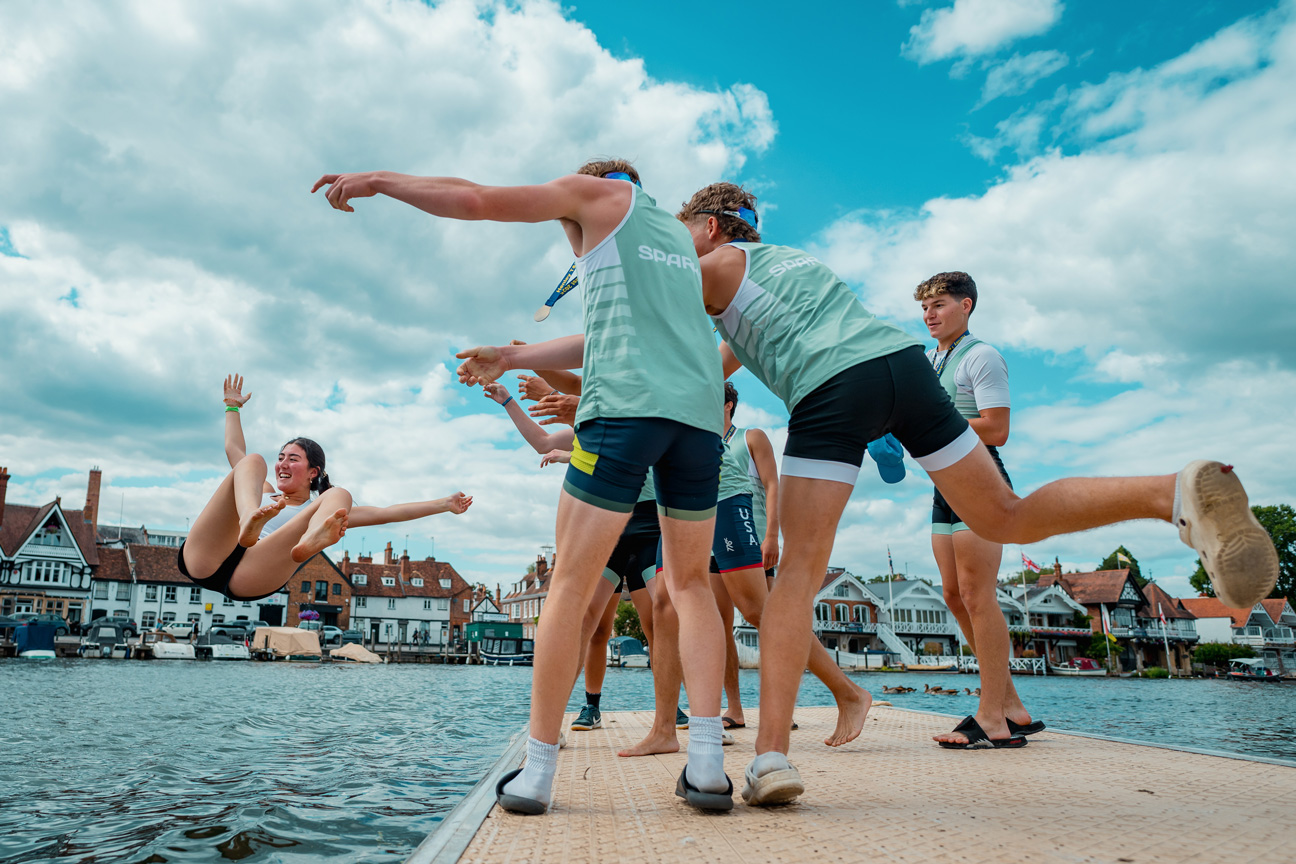
You step off the bus (or out of the airport) carrying a duffel bag and a head full of new ideas. You've trained harder than you have before, learned things about your technique you didn't know, and built relationships with coaches and athletes who saw you differently than your home program does. You feel like a different athlete.
The question that determines whether camp was a turning point or a pleasant memory is simple: what do you do now?
This guide is about the after. How to capture what you learned, translate it into your home training, and make camp the beginning of a developmental arc rather than its peak.
The 72-hour window: capturing what you learned
Memory is unreliable, and it degrades faster than most people realize. The specific technical cues that clicked during a Tuesday afternoon practice, the feeling of a perfectly timed catch that your coach helped you find, the pacing strategy that finally made sense during a threshold piece. These details are vivid when you step off the bus. Within a week, they've blurred. Within a month, they've been replaced by the rhythm of your regular training.
Write it down. Within the first 72 hours after camp, sit down with a notebook or document and capture everything you can remember. Not in general terms ("I got better at rowing") but in specifics: what technical cues did your coach give you? What did you notice about your own patterns? What goals did you set during camp? What felt different in the last few days compared to the first few?
Review any video and written feedback from camp while the experience is fresh. If your program provided annotated video, watch it, not just once, but carefully, noting the specific elements coaches highlighted. If you received written evaluations, read them and identify the two or three most important takeaways.
From this review, identify two to three specific technical or developmental focuses to carry forward. Not ten. Not "everything." Two or three priorities that you can genuinely work on in your home training over the next several months. Specificity matters: "improve my catch" is too vague. "Work on patience at the top of the slide and connection at the catch, using the cue Coach [name] gave me about feeling my feet before my hands move" is actionable.
The forgetting curve is real. What you don't capture within the first few days becomes progressively harder to recall with the precision that makes it useful. This isn't a suggestion. It's the single most important post-camp practice.
Translating camp insights to your home program
This is where many athletes stumble, because the transition from camp to home involves navigating different coaching voices, different training structures, and different expectations. For the full arc of the camp experience, including how to prepare going in and how to stay engaged during camp itself, see pre-, during-, and post-camp: how to maximize your experience. This article focuses specifically on the weeks and months after camp ends.
Different coaches, different cues. Your camp coach may have used language and technical cues that differ from your home coach's approach. Both may be describing the same thing, or they may have genuinely different technical philosophies. The productive approach is to look for the common ground. If your camp coach emphasized "connection at the catch" and your home coach talks about "driving with the legs," these may be compatible ideas expressed differently. Identifying the overlap prevents the confusion of feeling caught between two coaching voices.
Introducing camp learnings diplomatically. Your home coach has an approach, a plan, and a relationship with you. Returning from camp and announcing "they told me to do it differently" is unlikely to land well and is usually inaccurate anyway. A more productive approach: "I've been working on my catch timing, can I show you what I was practicing?" This frames camp learning as something you're doing, not something someone told you to do. It invites your home coach into the process rather than positioning them against it.
When camp and home philosophies genuinely conflict. Occasionally, a camp coach and a home coach will have substantively different technical views. This is more common than parents might expect, and it's not a crisis. The thoughtful response is to discuss the difference with your home coach openly, explain what you were working on and why, and collaborate on how to integrate the new perspective into your ongoing training. Most experienced coaches are comfortable with this. They recognize that exposure to different coaching perspectives is part of development.
Building on the camp foundation within your existing structure. Camp doesn't replace your home program; it supplements it. The goal is to weave camp insights into the training you're already doing, applying a new technical cue during a steady-state piece, using a self-coaching reflection practice after a hard interval session, or incorporating a strength exercise your camp physiotherapist recommended into your existing gym routine. The transition home from an intensive camp is also a recovery period. For the research on sleep, nutrition, and rest protocols, see recovery for teen runners: what the research says.
Physical development between summers
Camp is a concentrated input, not a sustained training plan. The physical adaptations that drive long-term improvement happen through consistent work across months, not through any single experience.
What camps can't do: build your aerobic base for you. The cardiovascular and metabolic adaptations that underpin endurance performance require sustained, progressive training over the fall, winter, and spring. Even the best two-week camp is a fraction of the training volume needed for meaningful aerobic development. Camp provides coaching, technique, experience, and a training stimulus, but the foundation is built at home.
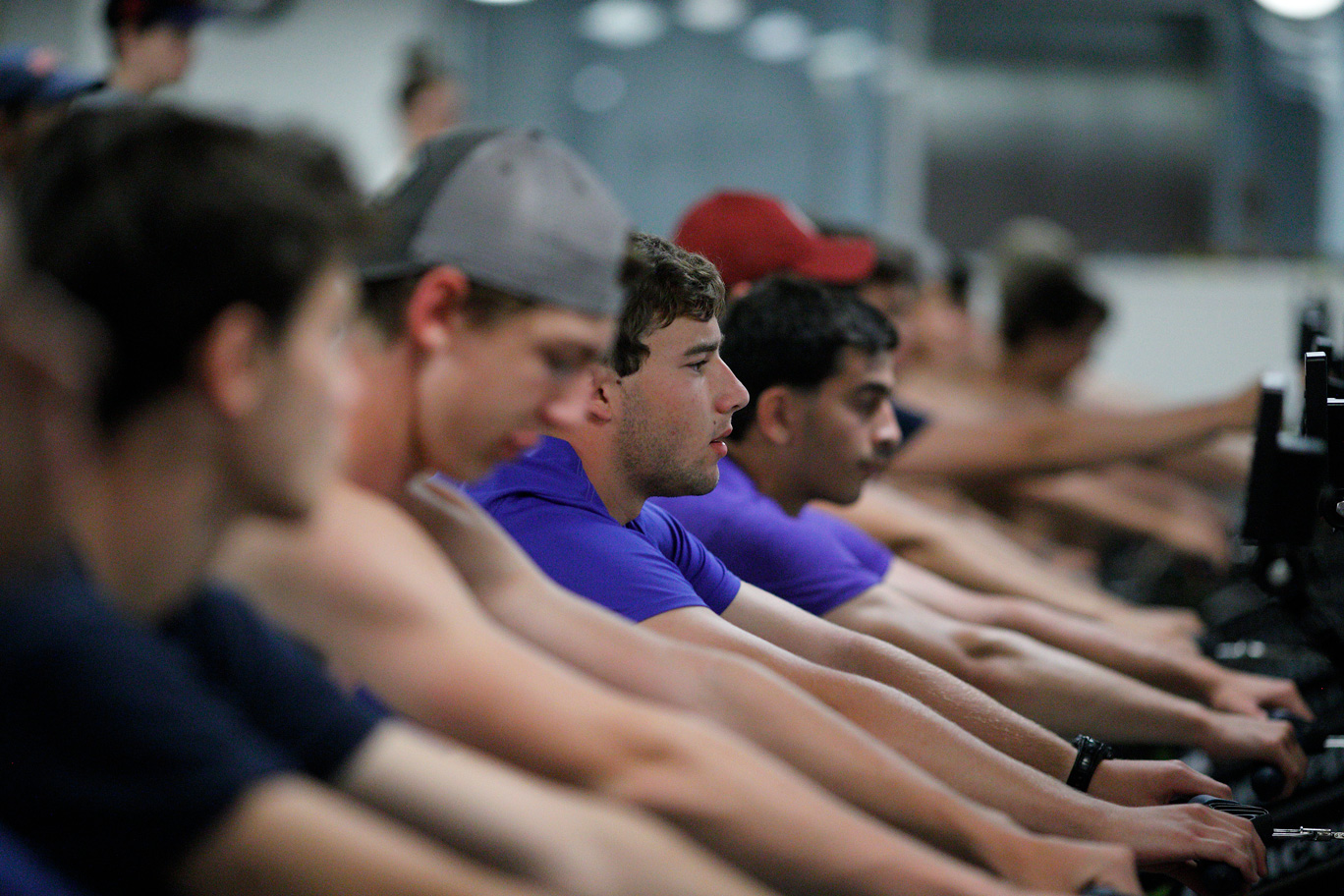
For rowers, the fall-winter-spring cycle typically involves fall head racing and technical work, winter erg training and strength development, and spring sprint racing. Camp insights should map onto this cycle: technical focuses from camp inform fall practice, fitness benchmarks from camp goal-setting inform winter erg targets, and racing insights from camp shape spring competition strategy. For a structured approach to using the winter months to improve the 2K, see how to actually improve your 2K erg score.
For runners, the cross-country and track seasons provide the competitive structure that sustained training supports. Altitude adaptation from a summer camp dissipates within three to four weeks at sea level, but the technical corrections, strength programming, and mental skills developed at camp can persist indefinitely if practiced. The gait analysis insights, the self-coaching reflection habits, and the customized strength work are the durable outputs. Use them. For a complete framework for using summer training to build toward the fall season, see preparing for cross country season: a summer training framework.
Erg training and self-directed work require structure. If camp provided a training framework or goal-setting document, use it as a scaffold for your independent training. If it didn't, create your own: what are your erg targets for the winter? What technical element are you focused on during steady state? How are you progressing your strength work? The self-coaching skills camp introduced are designed for exactly this kind of application.
Mental and technical maintenance
The mental skills and self-coaching habits camp introduced are among the most perishable, and most valuable, outputs. They atrophy without practice.
Video review. If camp introduced you to the practice of watching your own footage with a critical, coaching eye, continue it at home. Film yourself periodically, on the erg, on the water, during running workouts, and review the footage using the same framework you practiced at camp. What do you notice? What's changed since camp? What hasn't? This practice keeps your observational skills sharp and provides data for ongoing self-assessment.
Self-coaching reflection. The cycle of action, reflection, and intention-setting that structured camp programming should continue, even informally. After hard training sessions, take five minutes to reflect: what happened? What did you notice? What will you focus on next time? This doesn't require a formal journal (though journaling works well for many athletes). It requires the habit of deliberate observation and the discipline to do it regularly. For the philosophy behind this practice and how it becomes a sustainable habit, see what we mean by learning to coach yourself.
Staying connected. Camp alumni networks and cohort relationships are developmental resources, not just social connections. Peers who shared the camp experience understand the training philosophy, the technical language, and the developmental goals in a way that teammates who weren't there may not. Maintaining those connections, sharing training updates, asking questions, providing mutual accountability, extends the camp's impact.
Continued coach access. If your camp program offers post-camp coach access for questions, use it. A brief email to your camp coach ("I've been working on the catch timing we discussed, and here's a video clip, does this look like what we were going for?") demonstrates initiative and provides expert feedback on your ongoing work.
If your camp included mental skills or performance psychology programming, see mental skills training: what quality camps actually teach for context on what those practices involve and how to continue them.
Planning your next summer
How camp fits into a multi-year developmental arc is worth thinking about strategically.
When to return to the same program. If the coaching, philosophy, and structure worked well, there's strong value in continuity. Returning coaches who already know you can build on last year's work rather than starting from scratch. Progression within a camp system, from introductory to challenge to leadership programming, is designed to deepen development across years.
When to try something different. Exposure to diverse coaching perspectives has its own value. If you've attended the same camp for multiple years and feel you've absorbed what it offers, a different program can provide new stimulus, new relationships, and new ways of thinking about your development.
Balancing camp with other summer commitments. As athletes progress through high school, summers become more crowded. Recruiting visits, academic programs, family commitments, and employment compete for time. Camp remains valuable, but fitting it into a full summer requires planning. Extended programs (two weeks or more) deliver more developmental depth but require more calendar commitment. Shorter programs accommodate tighter schedules but with correspondingly more modest outcomes.
For rowers planning the next summer around the recruiting timeline, see the best rowing camps for high school athletes: a 2026 guide. For runners, see the best running camps for high school cross country runners: 2026 guide.
Camp is a catalyst, not a destination
The athletes who improve most after camp are the ones who treat the experience as a starting point. Who capture what they learned, apply it consistently, maintain the habits camp introduced, and build on the foundation across months and years. The development that matters most happens at home, in the daily work, in the self-coaching practices that compound over time.
Your coaches gave you tools. Your cohort gave you community. Your camp experience gave you a reference point for what's possible. What you do with all of that is up to you.