You’re being asked to make a significant investment — not just financial, but in trust. You’re considering handing your teenager to strangers in an unfamiliar place, sometimes in another country, for days or weeks at a time. You’re doing this because you believe it might help them grow. That’s not a small decision, and it deserves more than a glossy brochure and a few testimonials.
This guide is written for parents, by people who’ve worked with thousands of families navigating these decisions over 15 years. It’s not designed to point you toward a particular camp — including ours. It’s designed to give you a framework for evaluating any program, so you can make the decision that fits your family with clarity rather than anxiety.
Before You Start Looking: Understanding What You’re Buying
Sport camps exist on a spectrum, and understanding where a program falls on that spectrum is the first step toward evaluating fit.
Introductory camps (typically three to seven days) are designed for exposure: your athlete gets a taste of structured coaching, meets peers from other programs, and experiences training at a higher level. These are shorter, less expensive, and less intensive. They’re appropriate starting points for younger athletes, first-time campers, or families testing whether the format works for their child.
Developmental camps (typically one to four weeks) focus on measurable skill improvement. They’re longer, more structured, and often more selective about who attends. Coaching is more individualized, training loads are higher, and the expectation is that athletes arrive ready to work.
Competitive and leadership programs (typically two to four weeks or more) combine intensive athletic development with racing, personal growth, and often international experience. These are the most significant investments in time and money, and they’re designed for athletes whose commitment and readiness match the program’s demands.
Understanding what “residential” means in practice is also worth considering. Your athlete will be living away from home, supervised by camp staff, in a structured daily routine. This involves a degree of independence — managing their belongings, navigating social dynamics, regulating sleep and nutrition with support but without you as the intermediary. For many teenagers, this is one of the most valuable aspects of the experience. But readiness varies, and there’s no developmental failing in deciding your athlete needs another year before they’re comfortable in that setting.
The hidden curriculum of residential camp programming — learning to live with peers, managing homesickness, navigating unfamiliar routines, building independence — often matters as much as the athletic instruction. Families who understand this going in tend to evaluate programs more completely.
The Three Questions Every Camp Should Answer Before You Pay
Before comparing specific programs, start with three questions that apply universally. The quality of the answers you receive will tell you more than any brochure.
What does your athlete actually do all day? Request a detailed daily itinerary before you register. Not a general overview — a specific schedule. What time does training start? How long is the morning session? What happens between sessions? What does the evening programming look like? Any camp that can’t tell you what Tuesday at 2pm involves hasn’t planned Tuesday at 2pm. The programs that have invested in curriculum design will show you exactly what they’ve built. The ones that respond with generalities probably haven’t designed at that level of specificity.
Who is coaching, and what else are they doing? Coaching credentials matter — you want to know the staff’s experience and qualifications. But equally important is their workload. If your athlete’s head coach is also managing lunch logistics, handling a housing issue, supervising evening check-in, and responding to parent emails, the quality of their coaching suffers. Ask not only who the coaches are but what they’re responsible for beyond instruction.
What does your athlete take home? Technical improvement from a one- or two-week camp is real, but it fades without structure to maintain it. The more valuable question is whether the camp teaches your athlete how to continue developing after they leave. Does the athlete receive video review they can study at home? Self-assessment tools? A reflection practice they can maintain independently? A framework for setting training intentions? The camps that think about the long arc of development — not just the week they’re hosting your kid — are the ones delivering lasting value.
Staff Ratios: The Number That Matters Most
Staff-to-athlete ratio is the single most consequential variable in a camp experience, and it’s also the most commonly misrepresented.
The math is simple. In a 1:10 coaching ratio, each athlete receives approximately six minutes of individualized attention per coaching hour. In a 1:3 ratio, that number rises to twenty minutes. Over a full day of programming with multiple sessions, the difference in total individual attention is dramatic. Across a week or two, it compounds further.
How camps inflate their ratios is worth understanding. Some count non-coaching staff — administrators, camp counselors, logistics coordinators — in the advertised number. Some advertise the ratio for one specific session rather than the daily average. Others include volunteer helpers or part-time assistants who aren’t delivering primary instruction.
The question to ask is specific: “How many full-time, credentialed coaches are working with my athlete each day, and how many athletes are they responsible for during each training session?” That’s the number that determines the quality of attention your athlete receives.
Staff credentials versus staff continuity is another dimension worth probing. Credentials matter — you want qualified coaches with relevant experience. But returning staff matters too. Programs with high staff retention tend to have more developed cultures, better-established protocols, and staff who understand the program’s values. Ask how many staff members are returning from previous years.
The Coaching Staff vs. Operations Staff Distinction
This is a concept most families haven’t encountered, but it materially changes the experience.
The standard model in athletic camps is one staff that handles everything. The coaches who run your athlete’s morning training session are the same people dealing with a roommate conflict, a dietary accommodation, a homesick camper, and a facilities issue — all before the afternoon session begins. By the time they’re back on the water or the trail, their attention is divided and their energy is depleted.
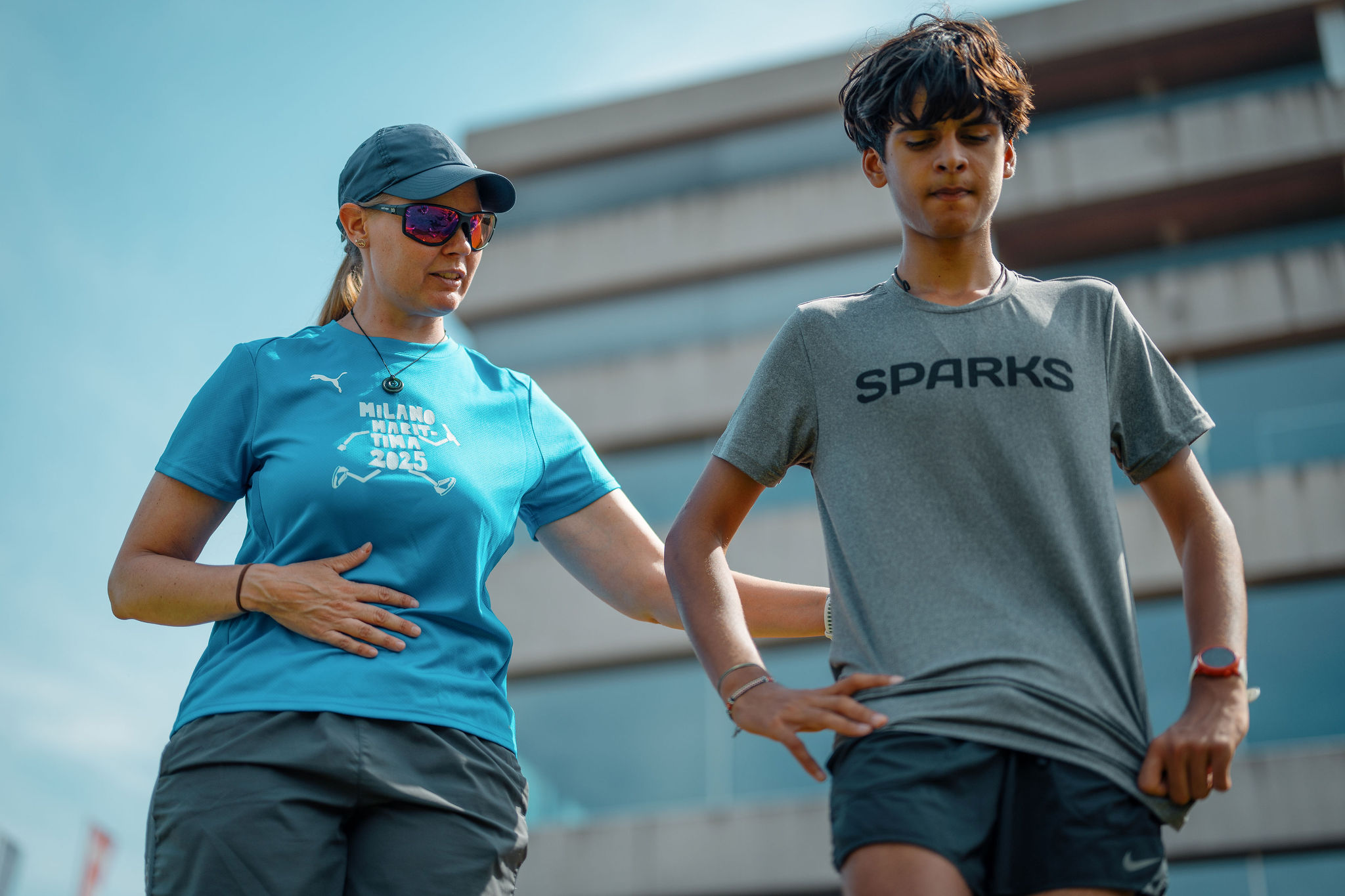
A two-team model separates coaching from operations entirely. The coaching staff focuses exclusively on technical instruction, video analysis, performance psychology, and individualized feedback. A separate operations team handles pastoral care, logistics, safety, meals, housing, and parent communication. Coaches coach. Operations staff handle everything else.
This is not industry standard. Most camps don’t operate this way because it requires hiring and paying two full staffs, which is significantly more expensive. But the impact on coaching quality is direct and measurable. When a coach’s only job during a training session is coaching, the athlete gets a different experience.
Ask whether any camp you’re considering uses a two-team structure. If the answer is specific — “Yes, we have a separate operations team of X people who handle logistics and pastoral care” — you’re looking at a program that has invested in this distinction. If the answer is vague or noncommittal, the coaching staff is probably doing double duty.
What “Developmental” Actually Means — and Red Flags It Doesn’t
Every athletic camp in 2026 describes itself as “developmental.” The word has become so universal it’s nearly meaningless. The question is whether the programming behind the word is specific or decorative.
Genuine developmental markers include structured reflection practices — not icebreakers labeled as “team bonding,” but actual frameworks where athletes assess their own performance, set intentions, and track progress. They include individualized assessment: video review where the athlete watches and evaluates their own performance before the coach offers feedback, gait analysis, strength profiling, or other tools that give the athlete concrete data about where they are. They include performance psychology integrated into daily programming — not a single motivational speech on day one, but a methodology woven through every session. And they include self-coaching tools the athlete takes home: a reflection journal, a self-assessment framework, a practice for setting daily training intentions.
Red flags are equally identifiable. Be skeptical of vague language about “growth” and “transformation” that never explains how. Be cautious of camps that list “performance psychology” as a feature but can’t describe what that actually looks like in a daily session. Watch for motivational speakers positioned as sport psychologists, or “mindset training” that amounts to inspirational quotes and team cheers.
The test is concrete: “Walk me through one specific session of your developmental curriculum. What does my athlete do during that session, and what do they take away from it?” A program that has built genuine developmental programming will answer this in detail. One that has appropriated the language without the substance will struggle.
Safety, Medical Protocols, and the Practical Details
The non-glamorous evaluation criteria matter as much as the coaching philosophy.
Medical protocols. At minimum, a program should have staff with current first aid and CPR certifications, a defined protocol for injuries and illness (including how they communicate with parents), and access to local medical facilities. For longer or more intensive programs, either an athletic trainer or physiotherapist should be on site or on call. For international programs, ask about medical evacuation procedures and travel insurance requirements.
Safety certifications. Does the camp hold formal safety certifications or maintain a partnership with an external safety organization? Are background checks conducted on all staff — coaching and operations? For water sports: how many safety launches are on the water during every training session, and who operates them?
Food quality. Athletes in serious training need to eat well, and food is a surprisingly reliable indicator of how much a camp invests in the full athlete experience. Ask about meal quality, snack availability, and how dietary restrictions and allergies are handled. Camps that cut corners on food are usually cutting corners elsewhere.
Communication with families. What’s the parent communication protocol during camp? Is there a dedicated contact for family questions? How and when are parents updated on their athlete’s experience and progress? Quality programs establish clear expectations: regular staff updates, defined hours when athletes can contact home, and protocols for how emergencies are communicated. Be cautious of programs that are vague about this — clear communication policies indicate operational maturity. For international programs, time zone differences, cell service, and emergency contact procedures all deserve clear answers. For detailed guidance on international camp logistics, see What Parents Should Know About International Running Camps.
Recognize pressure tactics as a red flag. If a program pushes you to commit before you’ve had your questions answered, pressures you with scarcity claims, or is evasive about staff qualifications, supervision structure, or medical protocols, proceed with caution. Quality programs are confident enough in what they offer to give you the time and information you need.
Managing Expectations: What Camp Can and Can’t Deliver
Short camps (under a week) are good for exposure, inspiration, and a handful of new skills to practice at home. They’re not sufficient for significant fitness gains, lasting technical change, or deep coaching relationships. Longer camps (two weeks or more) can begin producing measurable development — technical, physical, and personal. Understanding what’s realistic for a specific program’s format and duration prevents the disappointment that comes from mismatched expectations.
References. Ask to speak with families who’ve attended. Any program confident in its quality will facilitate this. Listen for specifics: not just “my kid loved it” but what specifically changed, what the communication was like, how the program handled challenges, and whether the experience delivered what was promised.
Track record. Where do alumni end up? Not just in competitive terms — though recruiting outcomes and competitive results are relevant — but in terms of continued participation in the sport, leadership roles, and ongoing engagement with the program. Programs that produce athletes who stay in the sport, come back as staff, and maintain connections to the community are doing something right.
The intangible outcomes. Many parents report that the most visible changes after quality camp experiences aren’t athletic — they’re personal. Athletes who return more confident, more independent, more articulate about their own development, and more self-directed in their approach to training are demonstrating growth that extends well beyond the sport. These outcomes are harder to measure but often more durable.
The Cost Conversation
Camp costs range from a few hundred dollars for local day programs to $10,000 or more for extended international experiences. Understanding what you’re paying for helps you evaluate value rather than just price. For a deeper breakdown of how camp economics actually work, see The Real Cost of Premium Athletic Camps.
Understand what’s included versus what’s extra. Program fees typically cover coaching, housing, meals, and scheduled activities. They often don’t include travel to and from camp, equipment, spending money, travel insurance (for international programs), or incidentals. For international programs, flights alone can add $1,000–2,000. Calculate the full cost of attendance, not just the tuition, to compare programs accurately.
Financial aid and payment plans. Always ask. Many programs offer need-based scholarships, payment plans, or sibling discounts. Quality programs that care about accessibility will have some mechanism for families with financial need. Don’t let sticker price alone eliminate a program before you’ve asked the question.
Value versus price. A $2,000 camp isn’t half as good as a $4,000 camp, and a $4,000 camp isn’t half as good as an $8,000 camp. Value depends on what the specific program delivers for the specific investment — staff quality, ratio, duration, structure, and whether the outcomes match your athlete’s needs. An expensive program that doesn’t fit your athlete is a poor investment. An affordable program that does fit is a great one.
When premium programming is worth considering: your athlete is serious and committed, ready for intensive development, and the family can make the investment without financial strain. When it may not be the right time: your athlete is exploring the sport, hasn’t attended camp before, or the cost creates genuine stress. There are strong programs at every price point, and starting with a more accessible option to confirm fit before committing to a larger investment is a sound approach.
Your Athlete’s Voice
Your athlete’s engagement matters more than any program’s quality. The best camp in the world is wasted on a teenager who doesn’t want to be there.
When to follow their lead. If your athlete is expressing genuine interest in a specific program, sport, or type of experience, that internal motivation is the strongest predictor of a productive camp experience. Athletes who choose camp — rather than being sent to camp — tend to engage more fully.
When to guide. If your athlete is interested but unsure, or if they’re drawn to a program for reasons that may not align with developmental fit (because a friend is going, because the location sounds fun), it’s appropriate to help them think through what they’re actually seeking and whether a specific program matches.
Signs they’re ready. They can manage basic self-care independently, handle social situations with reasonable maturity, are willing to try new things and accept coaching from unfamiliar adults, and express interest in the experience rather than anxiety about it. Some nervousness is normal and healthy. Persistent dread is a signal worth heeding.
Signs they might need more time. Significant anxiety about separation, reluctance that doesn’t abate with information and preparation, or behavioral signals suggesting they’re agreeing to make you happy rather than because they’re genuinely interested. There’s no developmental failure in waiting a year. Readiness varies, and pushing an unready athlete into a camp experience can create negative associations that make future participation harder.
Your Evaluation Checklist
Here’s the summary framework you can apply to any camp you’re considering.
Request a detailed daily itinerary — not a brochure overview, but a specific schedule. Verify the coaching ratio using only credentialed coaching staff, not total staff count. Ask whether the camp operates a two-team structure separating coaching from operations. Request specifics on the developmental curriculum — what does a session look like, and what does the athlete take home? Confirm safety protocols, certifications, and medical access. Ask about food quality and dietary accommodation. Clarify the parent communication process during camp. Ask to speak with families who’ve attended. Calculate the full cost of attendance, not just tuition.
The camps that answer these questions easily are the ones that have already thought about them deeply. The ones that struggle to answer are telling you something too.
Choosing a sport camp is ultimately about matching your family’s priorities — athletic development, safety, value, personal growth — with a program that delivers on them. Trust your judgment, ask the questions that matter to you, and remember that the right choice is the one that fits your athlete, your family, and your circumstances.
For sport-specific guidance, see The Best Rowing Camps for High School Athletes: A 2026 Guide or The Complete Guide to Coxswain Camps. A companion guide to the best running camps for high school cross country runners is coming in April 2026.
If you’d like to discuss how Sparks programs might fit, we’re happy to walk through specifics. Reach out in the lower right hand corner. And if the honest answer is that another program serves your athlete better right now, we’ll tell you that too.