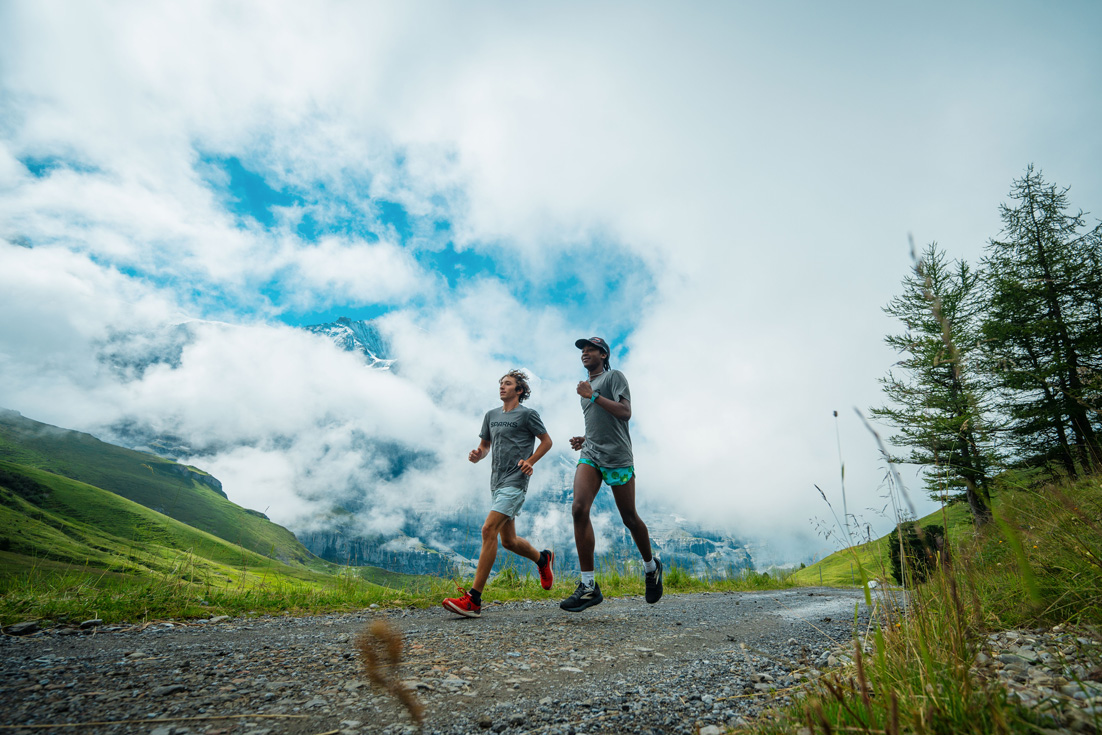
Altitude training has migrated from the domain of professional athletes and Olympians to something accessible to motivated high school runners. Multiple programs now offer altitude camp options — from domestic programs in Colorado and Arizona to international experiences in the Swiss and Italian Alps.
The appeal is clear: train at elevation, come home faster. But the physiology is more nuanced than the marketing. This article explains what altitude training actually does, what the research says about who benefits, how long it takes, and how to evaluate altitude camp options based on science rather than claims.
What Actually Happens in Your Body
Altitude training works through a straightforward physiological mechanism, but the timeline and magnitude of adaptation are often misunderstood.
The stimulus. At elevation, air pressure decreases and each breath delivers less oxygen to your bloodstream. Your body detects this reduced oxygen availability and initiates a cascade of compensatory responses. The most significant for runners: increased production of erythropoietin (EPO), a hormone that stimulates red blood cell production. More red blood cells means greater oxygen-carrying capacity — which, upon return to sea level, translates into improved aerobic performance.
The adaptation timeline. This is where expectations need to be grounded in research rather than hope.
During days one through three, the body is in initial adjustment. Heart rate increases, perceived effort rises at familiar paces, and sleep quality often suffers. Performance typically decreases. This is normal physiology, not a sign that something is wrong.
Between days four and ten, the body begins adapting. EPO production increases, and early cardiovascular adjustments take hold. But this is the beginning of the process — measurable changes in red blood cell volume are minimal at this stage. The Italian Alpine Running Challenge in Sestriere trains at 6,677 feet — within the optimal range for EPO stimulation — on a plateau that allows controlled programming rather than forced elevation gain.
At two weeks and beyond, meaningful physiological changes begin to consolidate. Research consistently identifies two to three weeks as the minimum duration for altitude exposure that produces measurable improvements in hematological markers — the blood-level changes that actually drive performance enhancement. Some studies suggest that three to four weeks produces more robust and durable adaptations.
The research consensus is clear: altitude camps shorter than 10 days provide acclimatization experience and training benefits from focused coaching, but the specific altitude-related physiological adaptations are minimal. If altitude adaptation is the primary goal, two weeks is the evidence-based minimum. The Swiss Alpine Running Challenge in St. Moritz places athletes in the same Engadin Valley training environment used by the On Athletics Club and Olympic marathoners — with a dedicated physiotherapist monitoring adaptation throughout.
The optimal elevation. Not all altitude is equally productive. Below approximately 5,000 feet, the reduced oxygen stimulus is insufficient to trigger meaningful adaptation. Above approximately 9,000 feet, the impairment to training quality, recovery, and sleep quality begins to outweigh the benefits — athletes can't train hard enough to maintain the quality sessions that drive performance.
The productive range for most athletes falls between 6,000 and 8,500 feet. Within this window, the altitude stimulus is sufficient to trigger adaptation while training quality can be maintained at levels that produce concurrent fitness development.
The "live high, train low" model. Research by Levine and Stray-Gundersen popularized an approach where athletes live at moderate altitude (6,500-8,000 feet) but descend to lower elevation for quality training sessions. This approach maintains the altitude stimulus during rest and recovery while allowing athletes to hit target paces during workouts. Not all camp settings can accommodate this model logistically, but programs that offer training at varied elevations within the optimal range are applying the principle.
Altitude Camp Locations Compared
Families researching altitude camps will encounter several established destinations, each with distinct characteristics.
Flagstaff, Arizona (approximately 7,000 feet) is home to Northern Arizona University's running programs and several camp operations, including NAU's Project Gold. The elevation sits squarely in the productive range, the climate is dry and generally conducive to training, and the running infrastructure — trails, tracks, roads — is well-established. Multiple professional athletes and collegiate programs use Flagstaff for training blocks.
Colorado locations span a range of elevations. Keystone (approximately 9,200 feet) is on the higher end of the productive range — effective for altitude stimulus but potentially challenging for training quality, particularly for athletes new to altitude. Alamosa (approximately 7,500 feet) offers excellent conditions and is home to Adams State University's historically strong distance program. Boulder (approximately 5,300 feet) is lower than the optimal range for altitude adaptation but offers exceptional running culture, trails, and access to higher elevations for specific sessions.
St. Moritz, Switzerland (approximately 5,900-6,000 feet) sits at the lower end of the optimal altitude range but offers infrastructure purpose-built for athlete training: a free 400-meter track at altitude, an extensive groomed trail network, world-class recovery facilities, and a community accustomed to supporting professional athletes. The On Athletics Club Europe trains here, along with Olympic and professional runners from around the world.
Sestriere, Italy (approximately 6,700 feet) is home to Europe's highest outdoor athletics track at 2,035 meters. The higher elevation provides a more aggressive altitude stimulus than St. Moritz, and the terrain emphasizes technical trail running on Alpine paths.
The trade-offs between domestic and international altitude programs extend beyond physiology. Domestic programs offer simpler logistics, lower cost, and shorter travel. International programs offer cultural immersion, longer typical durations, smaller cohorts, and the experiential dimension of training abroad. The altitude stimulus itself — assuming appropriate elevation and duration — is physiologically comparable.
Is It Right for Your Athlete?
Altitude training isn't appropriate for every athlete at every stage of development, and responsible programs acknowledge this rather than maximizing enrollment.
Athletes who tend to benefit most from altitude camps are healthy and injury-free, with a consistent training base of several months or more. They can commit to the minimum duration for meaningful adaptation — two weeks at minimum. They're seeking a physiological and developmental edge before a major competitive period and are mentally prepared for the discomfort of the initial adjustment period.
Athletes who are probably not ready include those with recent injuries or inconsistent training — altitude adds stress to the body, and an athlete who isn't healthy or consistently trained is more likely to get hurt than to benefit. First-time camp attendees may be better served by a sea-level experience that lets them evaluate the camp format without the added variable of altitude adjustment. And athletes who can only commit a few days won't receive enough altitude exposure for the investment to be justified on physiological grounds.
Timing matters. When in the competitive calendar an altitude camp falls affects its value. Research on the return-to-sea-level performance window suggests that the benefits of altitude training peak between approximately seven and 21 days after descent. Athletes and families should plan altitude training relative to their goal competitions, working backward from race dates rather than fitting camp into whatever gap the summer schedule allows.
Evaluating Altitude Camps
When comparing programs, these factors help distinguish substance from marketing.
Duration. Camps under 10 days provide limited altitude-specific benefit, regardless of elevation. Two weeks is the minimum the research supports for meaningful adaptation. Longer isn't automatically better — training quality matters more than exposure duration beyond the minimum — but be skeptical of altitude-specific claims from short programs.
Elevation. What is the actual training elevation? Some programs are located at altitude but conduct significant portions of training at lower elevations. This can be a feature (consistent with the "live high, train low" model) or a limitation (if it's unintentional or not explained). Ask whether track workouts and key sessions happen at altitude or at a different elevation, and why.
Programming. How does the coaching staff adjust training for altitude? Athletes new to altitude need modified training loads, particularly in the first week. Recovery protocols should account for the increased physiological stress. Look for programs that monitor athletes individually for altitude adjustment — not one-size-fits-all programming that ignores the reality that different athletes adapt at different rates.
Staff expertise. Has the coaching staff worked with athletes at altitude before? Do they understand the adaptation timeline and adjust expectations accordingly? Can they individualize programming based on how specific athletes respond?
Facilities. Track access for controlled workouts is important for running meaningful intervals at altitude. Recovery facilities — pool, physiotherapy, appropriate nutrition — support the adaptation process. Housing quality affects sleep, which affects recovery, which affects adaptation. These aren't luxuries at altitude; they're factors that influence outcomes.
Our Programs
Sparks operates altitude running programs at two locations, with durations designed around the research on adaptation.
The Swiss Running Challenge in St. Moritz runs for two weeks at approximately 6,000 feet — meeting the research-backed minimum for meaningful altitude adaptation. Athletes have access to a dedicated track, extensive trail networks, and recovery infrastructure that includes pool, gymnasium, and physiotherapy. A dedicated physiotherapist is on staff throughout. Our 1:3 coaching ratio means individual training adjustments happen in real time as athletes respond differently to the altitude stimulus.
The Italian Alpine Running Challenge in Sestriere offers training at approximately 6,700 feet, with access to Europe's highest outdoor track at 2,035 meters. The higher elevation provides a stronger stimulus, and the program includes individual gait analysis, custom strength programming, and daily performance psychology sessions.
Both programs include education about the altitude response itself — athletes learn to understand what's happening in their bodies, why training feels different at elevation, and how to manage their return to sea level for optimal performance timing. This aligns with our broader philosophy of developing athletes who understand their own physiology rather than simply following instructions.
After Altitude: The Return Protocol
What happens when athletes return to sea level is at least as important as what happens during the altitude camp itself, and it's the piece most programs underemphasize.
The first one to five days post-return often feel flat. The body is readjusting to sea-level oxygen availability, and paradoxically, performance may actually dip briefly before improving. This is normal and expected, but athletes who don't know to expect it can become discouraged.
Between days five and seven, the performance window begins opening. The increased red blood cell volume developed at altitude now operates in a higher-oxygen environment, creating a measurable aerobic advantage.
The optimal performance window — days seven through 21 post-return — is when the benefits of altitude training are most pronounced. This is when goal races should ideally fall.
After approximately three to four weeks at sea level, the altitude-induced adaptations begin to wash out as the body recalibrates to its normal environment.
The practical implication: the timing of an altitude camp relative to goal competitions matters as much as the camp itself. Athletes and families should plan backward from key races, ensuring the return-to-sea-level window aligns with competitive priorities. Quality programs help athletes develop this return protocol as part of the camp experience.
For a detailed explanation of the physiology — what happens in the body at altitude, how long adaptation takes, and what to expect when returning to sea level — see What Altitude Training Actually Does for High School Runners.
Altitude training can provide real, research-supported physiological benefit — if the duration is sufficient, the elevation is appropriate, and the timing relative to competition is planned carefully. It's not a shortcut, and it's not for every athlete at every stage. But for the right athlete at the right time, it's a tool that works.
If you have questions about whether altitude training fits your runner's development plan, reach out in the lower right hand corner. We're happy to discuss timing, readiness, and whether our programs match what you're looking for.