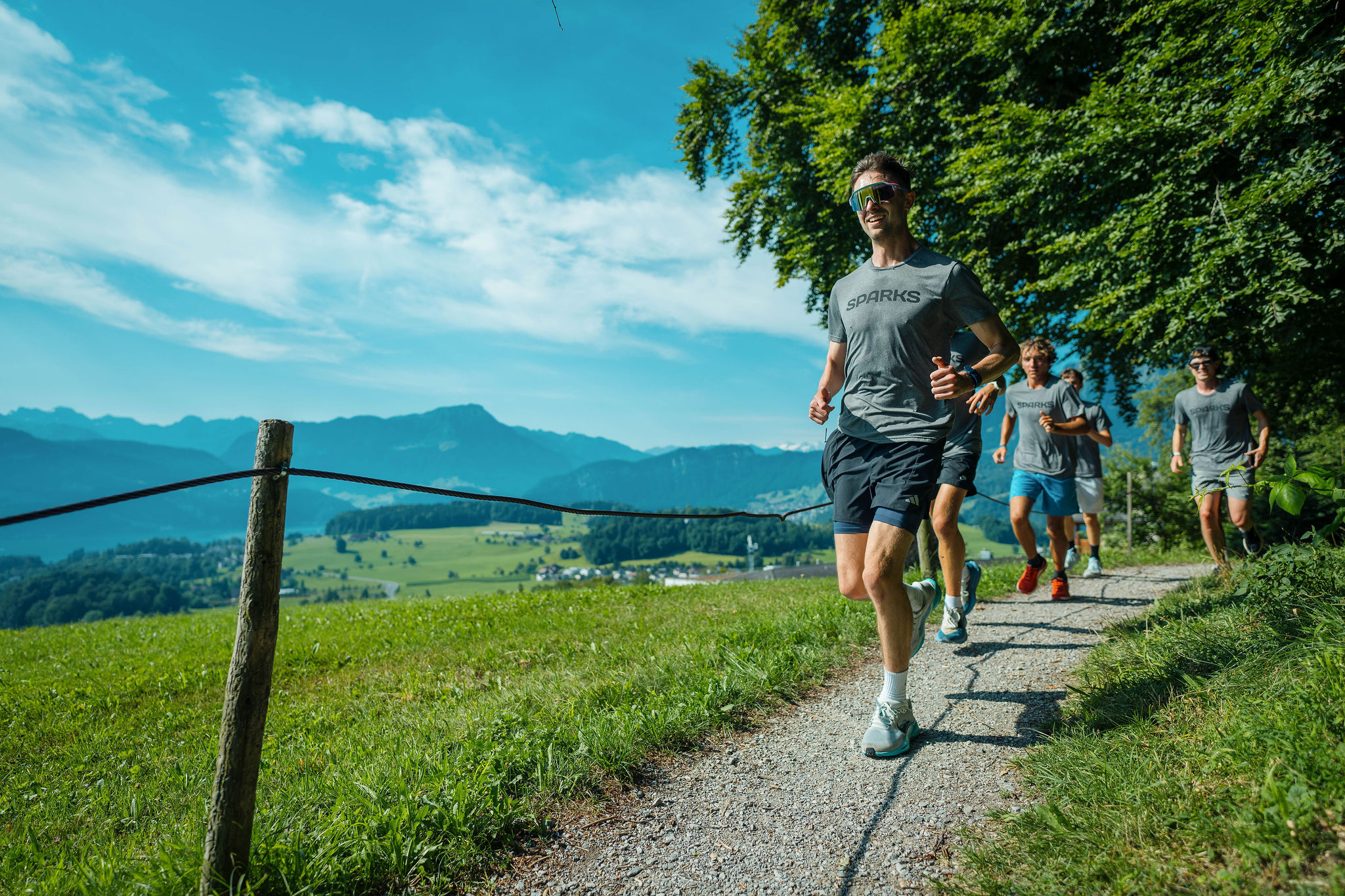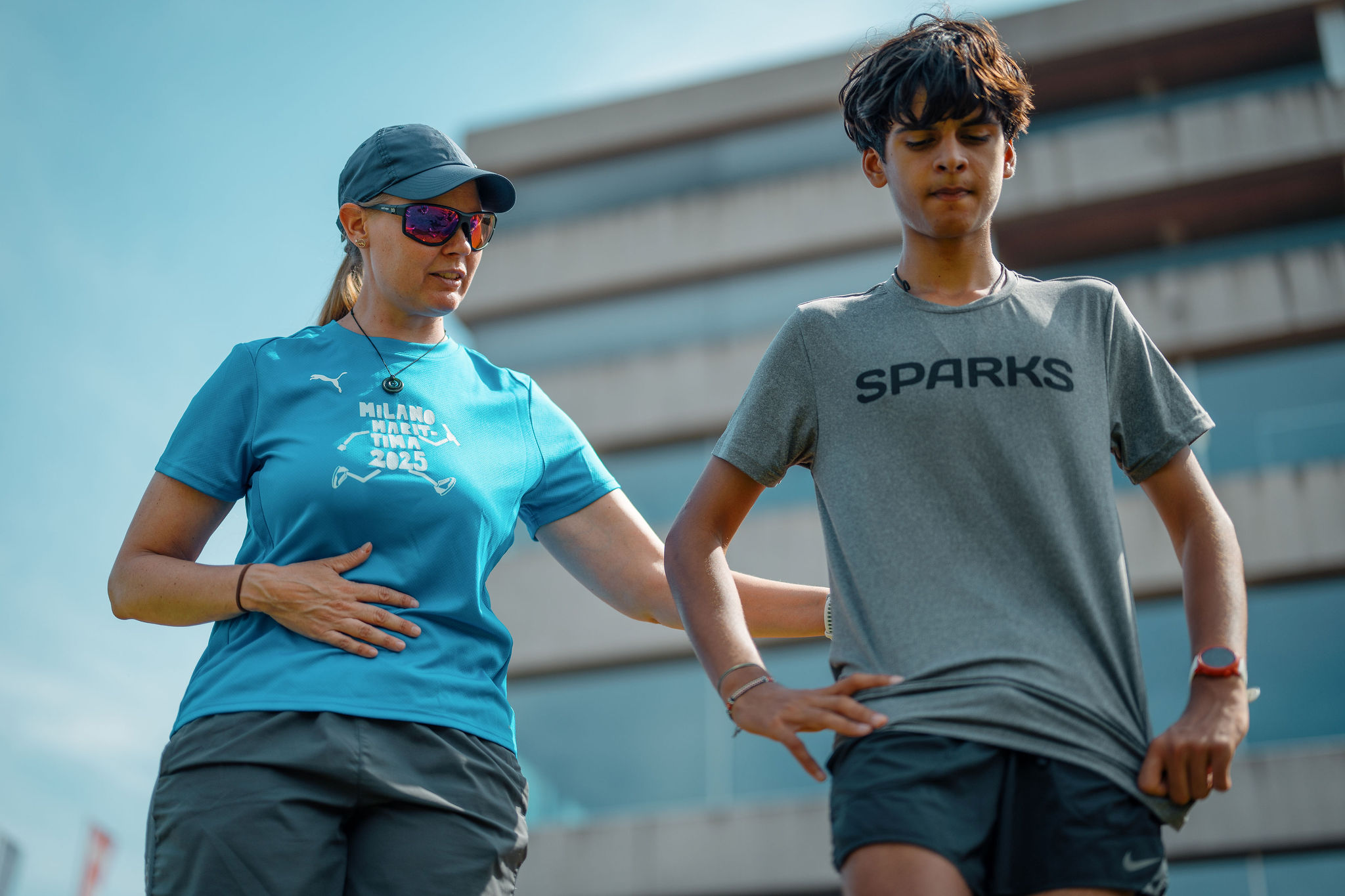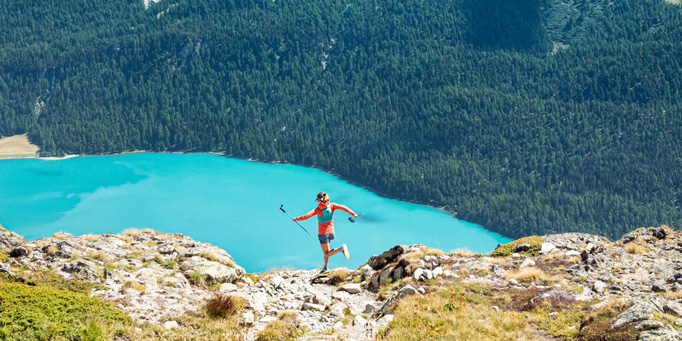
The athletes who summer in Saint Moritz are not tourists.
Recent reporting from Athletics Weekly captures a typical July at the Swiss Olympic High Altitude Training Base: Laura Muir running threshold sessions on the lakeside paths, Jakob and Henrik Ingebrigtsen down from Norway to train in the thin air, Charlie Da'Vall Grice and Kyle Langford in for middle-distance blocks, Jemma Reekie working through her summer base, Polish 800-meter runners Adam Kszczot and Marcin Lewandowski in the same week. Sebastian Coe used Saint Moritz as a mid-summer training base in his racing years. Triathlete Nicola Spirig, the 2012 Olympic gold medalist and four-time Swiss Olympian, has used it as a summer base across her career.
This is not a coincidence. Saint Moritz has been a Swiss alpine training base for endurance athletes since the run-up to the 1968 Mexico City Olympics. The athletes who come back, year after year, are choosing the same combination of altitude, infrastructure, and quiet that produced its reputation in the first place.
What does Saint Moritz actually offer an adult amateur runner who treats their training seriously? Not the version of Saint Moritz the tourism boards sell, which is real but not the point. The version a runner sees when they actually train there.
What the altitude does, and what it doesn't
Saint Moritz village sits at 1,822 meters (5,978 feet). The Swiss Olympic facilities operate at that elevation. Above the village, the trails climb fast: Corviglia at 2,486 meters, Muottas Muragl at 2,454 meters, Piz Nair at 3,056 meters, Piz Corvatsch at 3,451 meters.
The standard sport-science framing for altitude training is the live-high band of 2,000 to 2,500 meters. This is the range Flagstaff Arizona materials cite, and it is the consensus position across endurance coaching. Saint Moritz village sits just below that band. It is comparable to Font Romeu in the French Pyrenees (1,850 meters), slightly below Flagstaff (2,135 meters), considerably below Iten in Kenya (2,400 meters), and above Boulder (1,655 meters).
What sits inside the recognized live-high band is the Lej Alv Finnenbahn at 2,532 meters, a one-kilometer woodchip loop above Corviglia that has been used by Olympic distance runners for soft-surface interval work for decades. Some athletes deliberately stay closer to that elevation. Laura Muir has spoken about training near 2,400 meters for maximum altitude exposure while sleeping.
The training infrastructure matters as much as the altitude does. The 400-meter outdoor track has SMARTRACKS timing. The Ovaverva pool is a 50-meter FINA-standard facility. The lakeside paths, the lake itself for open-water swimming in late summer, the lift access to high trails, the soft-surface circuits at altitude. None of this is accidental. Saint Moritz built the training base before it built the resort identity, and the training base has been continuously upgraded ever since.
The "train low" complement sits an hour south. Chiavenna on the Italian side, at 333 meters in the bottom of the Bregaglia valley, is where many international-level distance athletes drop down for their highest-intensity sessions. The principle is simple: live and recover at altitude where the physiological stimulus accumulates, descend for the quality work where the body can produce a sea-level effort.
Here is the honest framing for a one-week stay. Meaningful red-blood-cell adaptation requires three to five weeks of continuous altitude exposure. A single week at Saint Moritz is not enough time to produce a cumulative haematological change. The week is a quality training stimulus and an environmental experience. The runner who expects a week of altitude to drop a marathon time by minutes is misreading the physiology. The runner who treats the week as a training environment, structured properly, is reading it correctly.
This matters because most of the destination-running writing about Saint Moritz oversells the altitude story. The altitude is real. What it does in a week is not what it does in a month.
The summer running window
The reliable summer running window for high trails runs from late June through mid-September. Within that window, the sweet spot for serious mountain running is mid-July through early September.
The month-by-month character matters:
June. Valley and mid-elevation trails are open by early June. High passes above 2,500 meters can still hold snowfields into early or mid-July in heavy-snow years. The wildflowers are at peak in late June. Tourist density is the lowest of the summer. The mountain railways that give access to the high terrain reopen in early-to-mid June (the Muottas Muragl funicular and the Corviglia network all reopen by late June).
July. Prime month for high-altitude work. By mid-July all the passes are reliably snow-free. The Engadin Ultra Trail runs in mid-July, anchoring the serious-runner cultural identity of the region. Daytime temperatures in the village sit comfortably in the 16 to 19 degree Celsius range.
August. Peak conditions and peak tourism. The Italian Ferragosto holiday in mid-August drives crowds. All trails are open. The mountain lakes are warm enough to swim. The St. Moritz Running Festival anchors the second weekend, with the 22.9-kilometer Engadiner Sommerlauf from Sils to St. Moritz-Bad as the cultural touchstone.
Early September. The connoisseur's window. Stable weather, cool clear days, the larches not yet turning, the tourist crowds gone, the trails empty. For a serious adult runner choosing one week to come, this is the week. Late August through the first two weeks of September delivers the best combination of conditions and quiet that the summer offers.
After mid-October, most mountain cable cars close for maintenance and the trails progressively snow up. The summer running window does have a definite end.
Six trails worth knowing
A coach's map of the Engadin, not a tourism listing. Each route does something specific for an adult runner.
The Muottas Muragl ridge to Alp Languard. The classical Engadin panoramic ridge run. Approximately 6.8 kilometers from the Muottas Muragl funicular top at 2,454 meters across to the Alp Languard chairlift, with high points at roughly 2,700 meters. Rocky single-track with some scree beyond the Segantini Hut. Views across the Bernina massif and down into the Roseg and Morteratsch valleys. The funicular up and chairlift down option removes the ascent toll, which lets a runner focus on aerobic time at altitude with the descent as concentrated eccentric work.
Val Roseg. From Pontresina at 1,805 meters up the glacier-rimmed valley to the Hotel Restaurant Roseg Gletscher at around 2,000 meters. About 13 to 14 kilometers round-trip on the gravel valley floor. Gentle gradient, runnable at multiple intensities, dramatic scenery throughout. The Fuorcla Surlej extension climbs another 750 meters to 2,755 meters on rocky single-track for a runner who wants a harder day. Val Roseg is the Engadin's most photogenic accessible terrain.
Morteratsch glacier approach. From the Morteratsch railway station, the Gletscherweg leads to the snout of one of the longest glaciers in the Eastern Alps. The runnable section is flat-to-gentle gradient, about 50 minutes one-way at walking pace and considerably less at running pace. Trail signage marks the glacier's documented retreat across decades, which gives the run a quietly powerful framing that other Alpine routes do not have. A useful warm-up or shake-out option.
Piz Nair. The Free Fall Vertical course, run annually as part of the St. Moritz Running Festival, climbs 1,069 meters of vertical across 6.6 kilometers, ascending the famous downhill ski course in reverse from St. Moritz village to the Piz Nair summit at 3,056 meters. Pure climbing. The non-race ascent follows the same line via the Signal cableway parking and Corviglia. For a coached week, this is one hard day, not a fixture in the regular rotation.
Suvretta loop and Lej Alv. Suvretta Pass sits at 2,613 meters north of Piz Nair. The full Suvretta loop, including the Lej Alv basin, runs roughly 30 kilometers with about 1,600 meters of vertical gain, a serious day at altitude for a fit runner. Lej Alv itself, the small alpine lake at 2,532 meters with its one-kilometer woodchip Finnenbahn loop around the water, is the canonical altitude-interval venue. Olympic distance runners use it for soft-surface track-style sessions at altitude. The terrain is moderately technical with some scree, and the views back toward Piz Nair and across to the Bernina range are among the best in the area.
Via Engiadina, Upper Engadin stages. The long-distance high trail that runs the length of the Engadin, 160 kilometers total in 12 stages from Maloja to Vinadi. For a coached week, the Upper Engadin stages (Maloja to Zuoz) work as individual day routes rather than the full traverse. Well-maintained single-track and forest road, technically moderate, the historical thread that ties the entire valley together. A runner who has come to the Engadin for a serious week and runs a Via Engiadina stage on day three has connected to the route that has anchored European endurance walking and running for over a century.
The lake routes and the recovery day
The Lake Saint Moritz circuit is a 4.5-kilometer loop at 1,768 meters, starting from St. Moritz-Bad. The surface is mixed paved and gravel, and the route is marked as part of the Helsana measured running trails and the Vita Parcours circuit. This is the recovery-day loop. Flat, accessible, social.
The wider Engadin lake terrain extends west. Silvaplanersee, between Saint Moritz and Sils. Lej da Segl (Lake Sils) further west, the longest of the chain. The Engadiner Sommerlauf course runs the lake chain for 22.9 kilometers from Sils to St. Moritz-Bad, which is the cultural touchstone for running the lake district. A serious runner spending a week here should run at least one of the lake loops at recovery pace. They are not what makes the Engadin an interesting training destination, but they are part of what makes a week here sustainable.
For a coached week structured around real training, the lake circuits anchor the recovery and warm-up days. The mountain trails anchor the work days.
The running culture: not UTMB
Saint Moritz is not Chamonix. The ultra-trail subculture that has built up around UTMB lives in the Mont Blanc valley, not the Engadin. Saint Moritz's running identity is the altitude-training-base plus the classical-Alps endurance heritage. Different audience, different cultural register, different ambitions.
Two events anchor the summer running calendar.
The Engadin Ultra Trail. Established in 2020 and held in mid-July. Four distances: 102 kilometers, 53 kilometers, 23 kilometers, and 16 kilometers. The 102-kilometer course carries roughly 5,677 meters of vertical gain with a high point at 2,818 meters at Fuorcla Val Champagna. It is an ITRA point race and a UTMB World Series qualifier, which gives it both serious-runner credibility and the slow build of a serious-runner audience. About 700 participants ran in 2025. This is where the ultra-running identity of the Engadin sits in summer.
The St. Moritz Running Festival. Held in early August, with the 22.9-kilometer Engadiner Sommerlauf from Sils to St. Moritz-Bad as the headline event. The festival also includes the 10.4-kilometer Run Pontresina, the 6-kilometer Run S, and the Free Fall Vertical up Piz Nair (6.6 kilometers, 1,069 meters of vertical). More festival-character, more approachable, the community face of running in the valley.
The winter equivalent gives the cultural context. The Engadin Skimarathon, the 42-kilometer cross-country ski race from Maloja to S-chanf, is the region's anchor endurance event. The 56th edition in 2026 drew 12,765 finishers. Cross-country skiing is the heritage. Summer running is the inheritance, both for the locals who train year-round and for the visiting athletes who arrive in July and August.
The cultural identity matters because it shapes what a week here actually feels like. Saint Moritz is where the altitude training establishment goes in summer. It is not where the ultra-trail subculture goes, and a runner arriving expecting the Chamonix register will misread the place.
What this terrain does that flat-country training cannot
Two things, principally.
The first is eccentric load. Descending 500 meters of vertical across a kilometer of trail is a different muscular demand than running 10 kilometers flat. The quadriceps work eccentrically (lengthening under load) at intensities and durations that flat training rarely produces. For an adult runner, this matters in two ways. It builds tissue tolerance that protects against the late-race breakdown that destroys long-distance performances. And it exposes weaknesses in posture, foot strike, and cadence that flat running hides.
A runner who arrives in the Engadin with a strong aerobic base but no recent eccentric exposure will feel the descents on day three. Calves, quads, and the small stabilizers around the knee will be sore in places that a long road run does not produce. By day five, those tissues have started to adapt. By the end of a week, the runner has built measurable descending capacity that did not exist before the trip. (For the specific adjustments masters runners should make for mountain terrain, see Trail Running After 40.)
The second is rhythm under fatigue. Sustained climbing teaches a runner to settle into a sustainable effort and hold it across 30, 40, 60 minutes of unbroken work. Most flat training, especially for runners coming from urban environments, is variable: traffic lights, intersections, shifts in pace. Engadin climbs are uninterrupted. A 40-minute climb at a sustainable effort builds an aerobic capacity that road tempo runs cannot replicate exactly, because the demand is not the same.
There is a third effect that is real but smaller in a single week: the environmental stimulus of altitude itself. Even a one-week stay produces measurable changes in submaximal heart rate at sea-level pace and in the subjective perception of effort once the runner returns home. Not adaptation in the haematological sense, but a real environmental input that shows up in the training log for a few weeks after the trip. (For more on this, our summer training framework for cross-country athletes covers the broader logic of destination training blocks.)
Who Saint Moritz is for, and who it isn't
Saint Moritz is for the adult runner who wants a week of structured training in the place the training establishment chose. Who values the depth of a destination that has been a serious athletic base for more than half a century. Who treats the altitude as an environment rather than as a haematological intervention. Who appreciates a Belle Époque hotel and a Fendant on the terrace at the end of a hard day, and also appreciates that the work came first.
Saint Moritz is not for the runner who wants UTMB-style ultra-trail terrain. That is Chamonix. The Engadin Ultra Trail is real and growing, but it is not the dominant cultural register here, and a runner arriving in search of the Mont Blanc trail-running subculture will be disappointed. Saint Moritz is also not for the runner who wants a wellness-and-spa week with running as decoration. The destination can deliver that, but it is not what makes the destination interesting, and a week of light running between spa treatments wastes what makes the place a serious training base.
The most defensible Saint Moritz week is a serious week. The destination rewards it.
The historical thread
Saint Moritz has been a Swiss alpine training base for endurance athletes since the run-up to Mexico City in 1968, when the demand for altitude preparation drove the first dedicated training infrastructure. The town hosted the Winter Olympics in 1928 and again in 1948, making it one of three cities to have hosted the Winter Games twice, alongside Innsbruck and Lake Placid. The 1948 Games were the first post-war Olympics. Many of the venues remain in operation: the Olympic Bob Run, the Cresta Run, the Corviglia and Piz Nair ski runs.
The Belle Époque hotels along the lake have hosted writers, philosophers, and athletes since Caspar Badrutt's 1864 wager with a group of British summer guests, the founding story of alpine winter tourism. Badrutt's Palace Hotel opened in 1896 and remains owned by the Badrutt family through five generations. The Kulm Hotel traces to 1856 and was the first Swiss building with electric lighting, in 1878. The Carlton, the Suvretta House, the Kempinski Grand Hotel des Bains. The Grand Hotel Kronenhof in Pontresina, slightly out of town and visible from the Roseg trail. The hospitality infrastructure was built around the people who came to ride the toboggans and stay the season, and it has aged into one of the most concentrated collections of serious Alpine hotels in Europe.
The case for an adult runner is not that the altitude transforms you in a week. It is that running where Olympic and World Championship distance runners choose to summer, on the trails that have anchored European endurance training for decades, in a place that has been a serious training environment for sixty years, is itself a form of education. The week works as training. It also works as a reset, a reorientation, a chance to run where the work is taken seriously, surrounded by people who are doing the same.
That is the Saint Moritz worth coming for.
Sparks is building destination training experiences for adult athletes, launching in 2027. Saint Moritz is one of the launch destinations. To hear when reservations open and to receive the next pieces in this series, join the list.