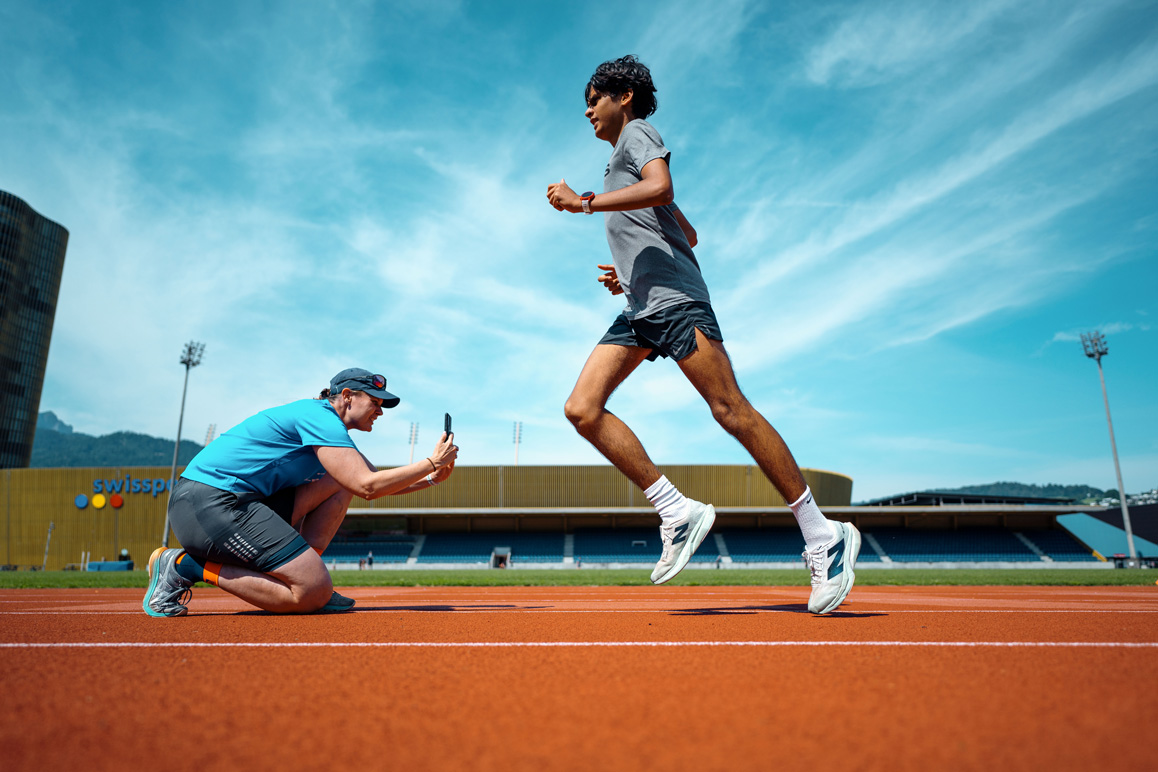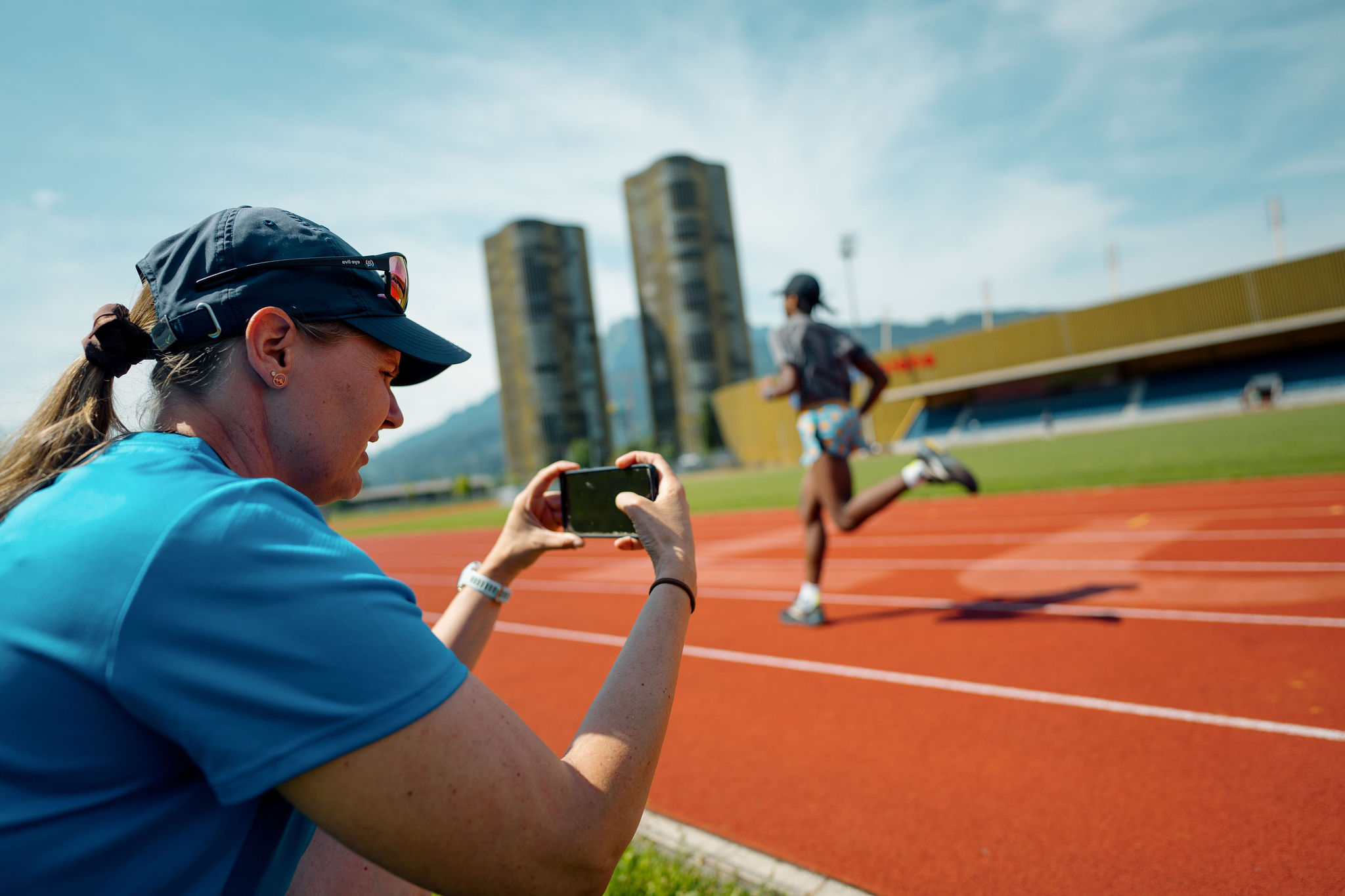
Most high school runners have never seen themselves run. They have a sense of how running feels, and they may have received occasional feedback from coaches, but they have never watched their own stride from multiple angles with someone who can explain what they are seeing. This gap matters more than most athletes realize.
Gait analysis, the systematic observation and measurement of how you move, reveals patterns that affect both performance and injury risk. Some of these patterns are easy to change once you see them. Others require focused work over time. All of them are invisible until someone helps you look.
What Gait Analysis Actually Measures
A thorough gait analysis examines several components of your running mechanics. Understanding what is being measured helps you interpret feedback and decide what to prioritize.
Cadence refers to how many steps you take per minute. Research suggests that most efficient runners fall somewhere between 170 and 190 steps per minute at moderate paces, though individual variation exists. Many high school runners, particularly those who developed their stride informally, run with lower cadences that correlate with overstriding.
Ground contact time measures how long your foot stays on the ground with each step. Shorter ground contact time generally indicates more efficient force application. Runners who "sit" in their stride, spending excessive time on the ground, often have opportunities for improvement.
Vertical oscillation describes how much you bounce up and down while running. Energy spent moving vertically is energy not spent moving forward. Excessive bounce often accompanies overstriding and can be addressed through cadence and posture adjustments.
Foot strike pattern identifies where your foot contacts the ground relative to your body. Heel striking far in front of your center of mass creates braking forces with each step. A midfoot strike closer to your center of mass allows for more efficient energy transfer.
Hip drop and pelvic stability reveal how well your core and glutes support your running posture. When the hip on your swing leg drops significantly during stance phase, it indicates weakness that affects both efficiency and injury risk.
At the Cross Country Leadership Program, every athlete receives individualized gait analysis in Sestriere.
Common Issues and What They Mean
Certain patterns appear frequently in high school runners. Recognizing these patterns is the first step toward addressing them.
Overstriding
Overstriding occurs when your foot lands significantly in front of your center of mass. Each step essentially puts on the brakes before pushing forward again. This wastes energy and increases impact forces through your joints. Overstriding is often accompanied by heel striking, low cadence, and extended ground contact time.
The fix usually involves increasing cadence slightly, which naturally shortens stride length and brings foot strike closer to your center of mass. A metronome app or music with appropriate beats per minute can help ingrain the new pattern.
Excessive Arm Swing
Arms that cross the body's midline or swing in exaggerated arcs create rotational forces that the core must counteract. This wastes energy and can contribute to lower back and hip issues. Efficient arm swing moves forward and back, with elbows at roughly 90 degrees and hands relaxed.
Many runners are surprised to see how much their arms cross their body. The sensation of running straight does not always match the visual reality.
Hip Drop
When your stance leg cannot adequately stabilize your pelvis, the opposite hip drops. This creates a cascade of compensations through your kinetic chain, often contributing to IT band syndrome, knee pain, and hip issues. The root cause is typically weakness in the glute medius and core, not a running form problem per se.
Addressing hip drop requires strength work, not just running cues. Single-leg exercises, lateral band walks, and targeted core work build the stability that allows better form to emerge naturally.
The Connection Between Form and Injury
Running injuries rarely appear from nowhere. They develop gradually as repetitive stress accumulates in tissues that are absorbing more load than they can handle. Inefficient form increases that load with every step.
Consider a runner taking 170 steps per minute for a 40-minute run. That is 6,800 foot strikes. If each strike involves slightly excessive braking force due to overstriding, the cumulative stress adds up quickly. Multiply by weeks of training, and you have a recipe for shin splints, stress fractures, or knee pain.
This does not mean every form imperfection causes injury. Bodies are adaptable, and many runners stay healthy with less-than-textbook mechanics. But when injuries do occur, gait analysis often reveals contributing factors that can be addressed to prevent recurrence.
Why Video Changes Everything
The limitation of verbal coaching cues is that they describe sensations you should feel, but feeling and seeing are different things. A coach might tell you to "land softer" or "increase your cadence," but without visual feedback, you are guessing at what the adjustment actually looks like.
Video analysis closes this gap. When you watch yourself run in slow motion, you can see exactly what the coach sees. The pattern becomes concrete rather than abstract. You can compare before and after, tracking whether your adjustments are producing the intended changes.
Modern video analysis does not require expensive equipment. A smartphone with slow-motion capability, positioned correctly, captures enough detail for meaningful assessment. What matters more than the technology is having someone who knows what to look for and can translate observations into actionable feedback.
What Athletes Should Feel vs. What Coaches See
One of the most valuable aspects of gait analysis is reconciling internal sensation with external observation. Athletes often think they are doing one thing while video shows something different.
A runner might feel like they are driving their knees forward aggressively, but video shows minimal knee lift. Another might feel like their arms are relaxed when they are actually carrying significant tension in their shoulders. These gaps between perception and reality are common and important to identify.
Good coaching bridges this gap by helping athletes develop accurate internal feedback. Once you know what efficient form actually looks like for your body, you can learn to recognize it by feel. This is the foundation of self-coaching: being able to monitor and adjust your own mechanics without constant external input.
Making Form Changes That Stick
Changing running form is harder than it sounds. Your current pattern is deeply ingrained through thousands of miles of repetition. Conscious attention can override it temporarily, but the old pattern tends to return as soon as focus drifts.
Lasting change requires deliberate practice over time. Focus on one element at a time rather than trying to overhaul everything at once. Use drills that isolate and reinforce the desired pattern. Check in with video periodically to verify that changes are taking hold.
The goal is not to think about form constantly while running. That would be exhausting and counterproductive. The goal is to gradually build a new default pattern that runs on autopilot. This takes weeks or months, not days. Athletes who expect instant transformation often abandon form work prematurely.
What We Include in Our Programs
At our running camps, gait analysis is integrated into the training experience. Athletes receive personalized video review with coaches who can identify specific patterns and prescribe targeted corrections. This is not a one-time assessment but an ongoing conversation throughout the two-week program.
We pair video analysis with custom strength programming that addresses the weaknesses underlying form breakdowns. An athlete with significant hip drop receives exercises targeting glute medius strength. A runner with excessive vertical oscillation works on plyometric drills that improve elastic recoil. The form work and strength work reinforce each other.
Most importantly, athletes leave with the ability to continue monitoring their own mechanics. They know what to look for, how to set up useful video, and what drills address their specific patterns. The goal is not dependence on our coaches but development of self-coaching skills that serve them for years.
Sparks runs two cross country programs at altitude for high school distance runners: the Cross Country Leadership Program in Sestriere and the Swiss Cross Country Challenge in Saint Moritz. Both are two-week, admissions-based programs at altitude with 1:3 coaching ratios. For program details and itineraries, visit the individual program pages or schedule a conversation.