The UK has some of the deepest rowing tradition in the world — from the Boat Race to Henley Royal Regatta to a school system that produces Olympic medallists with remarkable consistency. But when it comes to summer rowing courses for juniors, the options look quite different from what American families are accustomed to, and British families navigating the landscape for the first time may not realise how much the programmes vary in structure, coaching model, and purpose. This guide maps what's available and helps families — whether based in the UK or considering travelling to England for the summer — find the right fit.
What rowing courses are available in the UK?
The UK market is built around school-run holiday courses at independent schools, university-based programmes, and club-level clinics. These range from introductory learn-to-row weeks to competitive development programmes, with pricing from roughly £100 to £1,600 depending on format, duration, and what's included.
Eton College Dorney Lake Rowing Courses are the most established programme in the country. Five-day, non-residential courses run at Dorney Lake — the purpose-built, eight-lane course that hosted the 2012 Olympic rowing events. Students get three water outings per day plus land-based sessions, rowing up the Thames to Queen's Eyot and finishing the week with head races and a relay regatta. The course director, Hannah Vines, holds UKCC Level 4 certification (the highest British Rowing coaching qualification) and was named British Rowing's Community Coach of the Year in 2023. Eton is open to boys and girls aged 12-16 at all ability levels — over half of participants in 2024 were complete beginners. The course also provides roughly 40 free places per session for state-school students. This is a strong programme that does something specific well: broad-access, high-quality introduction to rowing at a world-class venue.
Shiplake College near Henley-on-Thames offers the closest thing to a residential rowing camp in the UK market. Week-long courses run in four blocks across July and August: two non-residential weeks and two residential weeks. Residential students get single rooms in boarding houses, three meals a day, Pilates, swimming, and an evening programme that includes a visit to Leander Club. On the water, athletes progress from stable larger boats to singles, doubles, and eights down the Thames through two locks to the Henley Royal Regatta course. Fridays conclude with a camp regatta. Shiplake accepts ages 13-18 and regularly sells out by Easter — not surprising given the school won the National Schools Regatta in 2025.
Shrewsbury School runs a residential course on the River Severn with a fleet of over 100 boats, nine coaching launches, and an indoor rowing tank. Pangbourne College operates at the boutique end — just 20 places per week, with coaching in recent years led by Harry Brightmore, the Olympic gold medallist who coxed the British men's eight at Paris 2024.
Durham University Boat Club offers non-residential camps tiered by experience level, using the university's rowing tank and the River Wear. The high-performance tier trains on the Tyne and includes campus tours — a genuine taste of university rowing.
On the Tideway in London, Fulham Reach Boat Club runs half-day sessions for experienced juniors, and Lea Rowing Club in Hackney offers affordable learn-to-row courses with bursaries available. Scottish Rowing runs camps at Strathclyde Park.
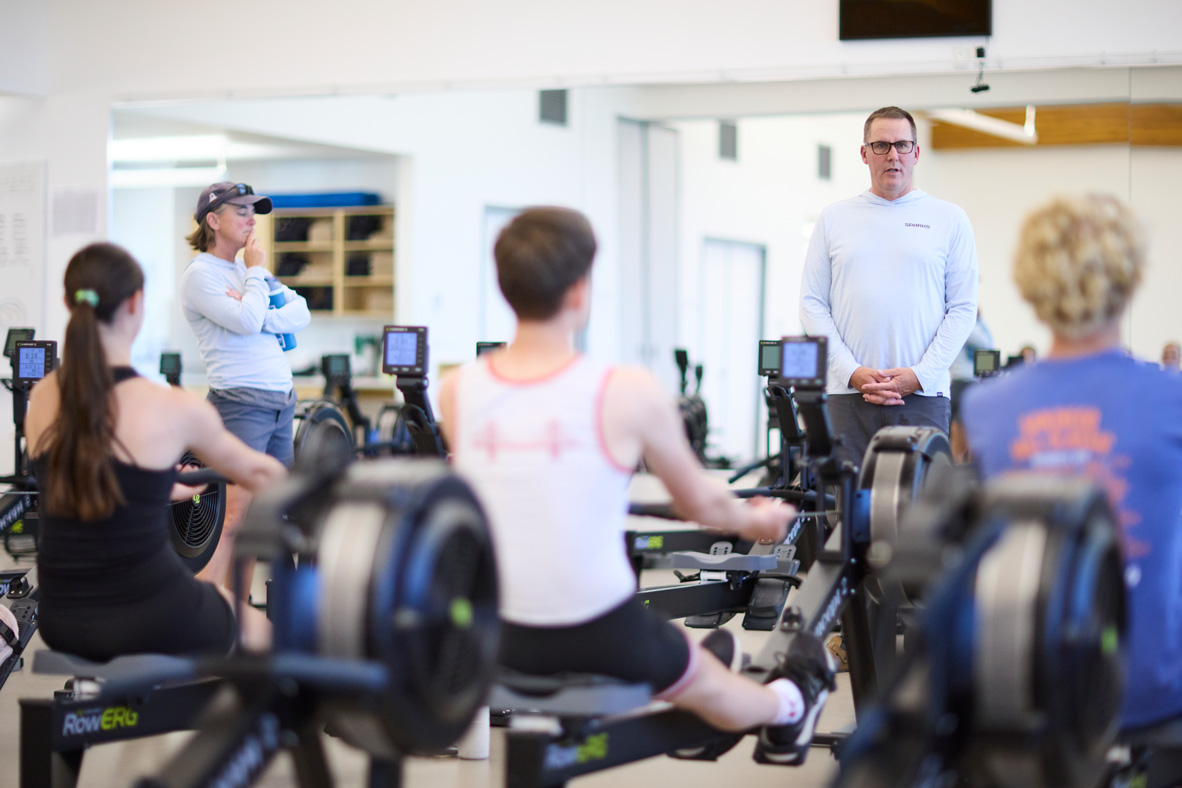
Sparks Cambridge is a 4-day residential programme at Cambridge University Boat Club's own facilities, running July 14-17 this summer. It operates under an explicit partnership with CUBC, using the historic Goldie Boathouse for land training and CUBC's Ely Boathouse for on-water sessions. The programme runs at a 1:5 staff-to-athlete ratio with separate coaching and operations staffs, accepts athletes ages 14-18 through a video application and interview process, and draws coaching staff from GB, US, Dutch, and Canadian national team backgrounds. It is the only programme in the UK that combines CUBC-level facilities access, admissions-based cohort formation, structured performance psychology, and a two-team staffing model.
Why do UK rowing courses look so different from American camps?
The structural reason is straightforward: the UK has no college rowing scholarship system. In the United States, summer camps serve a clear economic function — they sit inside a pathway where a rowing scholarship can be worth tens or hundreds of thousands of dollars. That financial incentive supports a commercial camp industry with premium pricing.
In Britain, the pathway runs differently. Day-to-day junior development happens year-round within school boat clubs and community rowing clubs. British Rowing's national governing body runs selective, invite-only development camps that feed the Olympic pipeline — the J16 Crew Sculling Camp, regional Performance Development Academies, and the programme that identified Olympic champions Helen Glover and Moe Sbihi through talent identification based on physical attributes. These are selection tools, not fee-paying products.
The result is a market where a British family's typical summer rowing expenditure is £200-£450 for a week of non-residential instruction. Residential options are rare and cap around £900-£950. There is no UK tradition of the intensive, residential, commercially operated camp that the American system produces — because the development system never needed one.
What this means for families evaluating options is that comparing programmes purely on price misses the structural context. A £450 Eton course and Sparks Cambridge at roughly £1,600 are not different price points for the same product. They are different products built on different models for different purposes.
What makes rowing at Cambridge different from other UK venues?
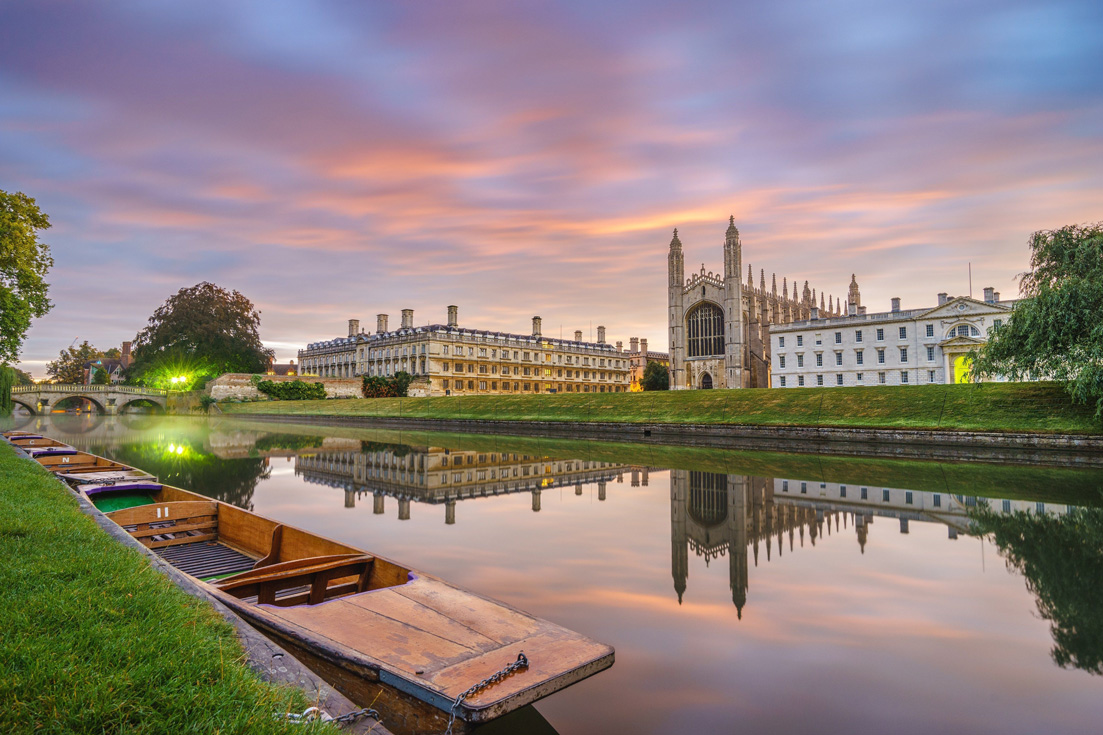
Cambridge University Boat Club was founded in 1828. The first Boat Race took place in 1829. The club has produced a continuous stream of Olympians — including recent medallists at Paris 2024. Roughly 1,500 undergraduates row across Cambridge's 30-college system, making it the densest concentration of rowing activity anywhere in the world.
The practical training environment matters more than the history. Sparks Cambridge uses a dual-venue system that mirrors how the actual CUBC Blue Boats train. Land work happens at Goldie Boathouse in Cambridge — a Grade II listed building with a gym, rowing tank, physio facilities, and video analysis capability. Water sessions happen at CUBC's Ely Boathouse, a purpose-built facility on the Queen Adelaide Straight — a 5-kilometre stretch of wide, flat, non-tidal water with almost no other traffic. The fleet includes Empacher and Filippi boats. Athletes live at Fitzwilliam College with their own rooms and meals in college.
The River Cam itself, while too narrow for race-pace training (which is precisely why CUBC trains at Ely), develops boat handling skills that open water doesn't demand. Its tight corners, shared traffic, and crossover points require navigational awareness that benefits any rower — particularly coxswains.
No other junior programme in the UK offers access to these specific facilities under this kind of institutional partnership. That's a factual statement, not a marketing claim. The venue alone is something families cannot access any other way.
What does the Sparks Cambridge programme include that UK courses don't?
Five structural differences separate Sparks Cambridge from the UK school-course model. These aren't quality judgments — they're design choices that produce a different kind of experience.
Admissions-based cohort formation. UK courses are open enrollment. Sparks requires a video application, written prompts, and an interview — assessing motivation, emotional maturity, and athletic experience. The result is a group of athletes who arrive with a shared baseline of commitment. This changes the training environment and the kind of coaching that's possible.
Two-team staffing. At every Sparks camp, coaching staff and operations staff are separate teams. Coaches coach. Operations staff — experienced secondary school educators and university student-athlete alumni — manage logistics, welfare, and community. UK school courses typically use combined-role staffing where coaches also handle pastoral duties, which divides their attention.
A 1:5 coaching ratio with national-team-calibre coaches. The coaching staff at Sparks Cambridge draws primarily from GB, US, Dutch, and Canadian national team backgrounds — a mix of British and international perspectives. CUBC coaches are given first selection on coaching slots. This ratio and pedigree is not available at any UK school course, where coaching teams are drawn from the school's own staff supplemented by course assistants.
Structured performance psychology. The programme uses an explicit Action-Reflection-Intention cycle: after each session, athletes identify what happened, what they noticed, and what to focus on next. Goal-setting, one-on-one coach reviews, seminars, and pre-camp preparation create a reflective practice framework that runs through the entire four days. Some UK courses include goal-setting elements, but none build their entire pedagogical structure around this kind of developmental architecture.
Video feedback and individual coaching conversations. Systematic video analysis integrated into coaching sessions, plus scheduled one-on-one review conversations with coaches. At the junior level in the UK, this kind of structured individual feedback is typically reserved for British Rowing pathway camps, not holiday courses.
How do you decide what's right for your athlete?
The right programme depends on where your athlete is, not on which one costs the most.
A 12 or 13-year-old who has never rowed — or has one season of experience and wants a fun, skill-building week — is well served by Eton (world-class venue, welcoming to beginners, strong coaching) or a club learn-to-row course(affordable, local, low-commitment). These are good programmes. They do what they're designed to do.
A teenager who wants an immersive residential week near the heart of British rowing tradition — the Henley stretch, Leander Club, the Regatta course — should look at Shiplake (residential, sells out early, strong competitive pedigree). A family wanting boutique coaching from an Olympic champion should consider Pangbourne.
For a rower who wants to understand what university-level rowing demands from the inside, Durham's high-performance camp offers a genuine taste with an explicit university-exposure dimension.
Sparks Cambridge is for the athlete — British or American — who is ready for something more intensive than a school holiday course and wants the combination of CUBC facilities, international coaching, admissions-curated peers, structured reflection, and the Cambridge residential experience. It serves a narrower audience than Eton or Shiplake. It's designed to.
For a broader framework on evaluating rowing camps by structure and philosophy — including the distinction between short-format courses and longer immersion programmes — The Best Rowing Camps for High School Athletes: A 2026 Guide walks through the three variables that define a camp's approach.
What about American families considering Cambridge?
For an American family, Sparks Cambridge offers something none of the US collegiate camps can: genuine international exchange. British juniors typically start rowing earlier and race in smaller boats more frequently than their American counterparts. Training alongside them — comparing approaches, sharing perspectives on different coaching systems, building relationships across the rowing world — reshapes how athletes understand the global sport and their place within it.
The programme also serves as an entry point into Sparks' broader international network. An American athlete who attends Cambridge and connects with the experience might move into a two-week Dutch Small Boats Challenge or Swiss Training Challenge the following summer. A British athlete might do the same in reverse — attending Cambridge as a home programme and then joining a Sparks camp in Boston, Holland, or Italy.
For families on either side of the Atlantic weighing the value of camp in the broader context of rowing development and recruiting, Rowing Camps and Recruiting addresses what camps can and can't do in that process.