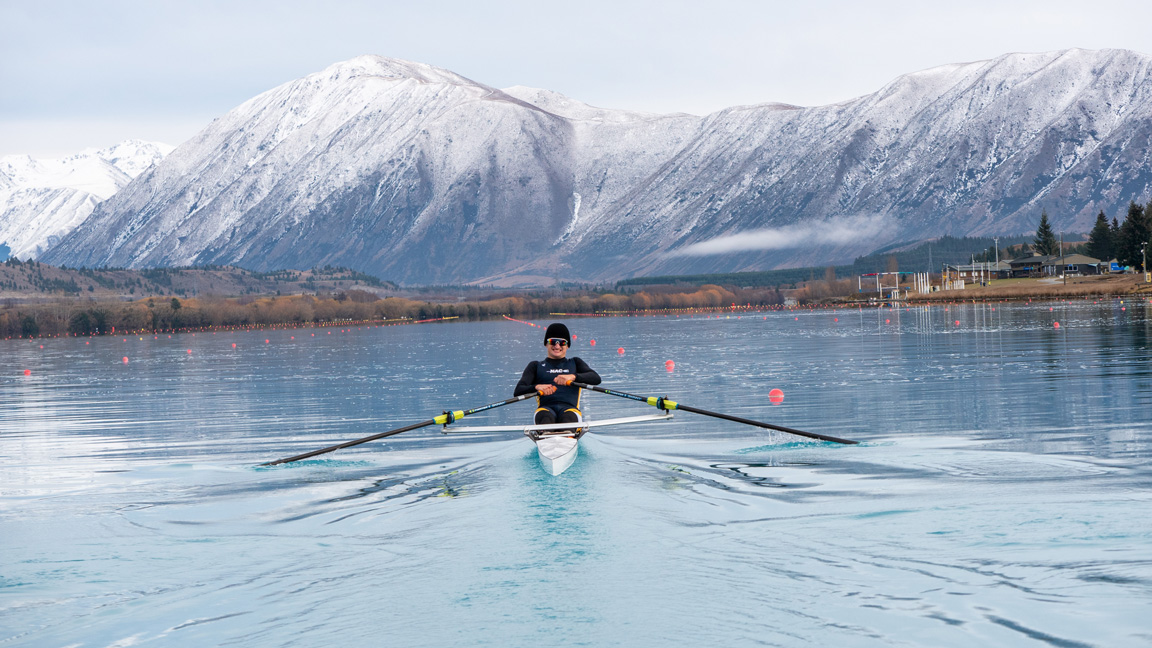
Racing is the test. It's where training meets reality, where preparation either holds or it doesn't, and where athletes learn things about themselves that no practice session can teach. But summer racing — racing at camp, often in unfamiliar boats with unfamiliar crews — is a different animal from racing at your home regatta in the boat you've trained in all season.
This guide covers why some camps include racing and others don't, what different racing formats offer, how to prepare for race day at camp, and how to make the experience count after it's over.
The Purpose of Summer Racing
Not all camps include racing, and the distinction is worth understanding. Programs that focus on instruction and skill development may deliberately avoid racing to keep the emphasis on learning rather than performing. Programs that include racing treat it as a developmental tool — not a showcase, but a laboratory.
The developmental value of racing at camp comes from the unfamiliarity. Racing in a crew you assembled three days ago, on water you've never seen, against competitors you've never raced, strips away the comfortable patterns that develop when you race in the same boat with the same people at the same venues. What's left is your ability to adapt, communicate, execute under pressure, and manage yourself when nothing is familiar. These are the skills that separate athletes who perform well in controlled conditions from athletes who perform well in any conditions.
There's an important distinction between racing as assessment and racing as development. Assessment-oriented racing asks: how fast are you right now? Development-oriented racing asks: what can you learn about yourself under pressure? The best camp racing experiences are designed around the second question. Times and results matter — they provide data. But the real value is in what the experience reveals about composure, adaptability, and competitive instincts.
For recruiting purposes, racing at camp can provide useful footage and results — but its importance depends heavily on context. College coaches are more interested in an athlete's technical quality and competitive composure than in a single result from a pick-up crew at a summer regatta. Racing experience contributes to recruiting readiness. It doesn't replace the erg scores, academic profile, and sustained competitive record that drive recruiting decisions.
Types of Summer Racing Experiences
Summer racing opportunities fall into several categories, each with distinct characteristics.
Domestic regattas include USRowing-sanctioned events, club regattas, and camp-organized competitions. These are familiar formats for most American junior rowers — standard lanes, standard distances, standard competitors. The advantages are logistical simplicity and recruiting visibility (college coaches sometimes attend or receive results). The limitation is that the racing environment may not push athletes far outside their comfort zone, particularly if they're competing against the same programs they race during the school year.
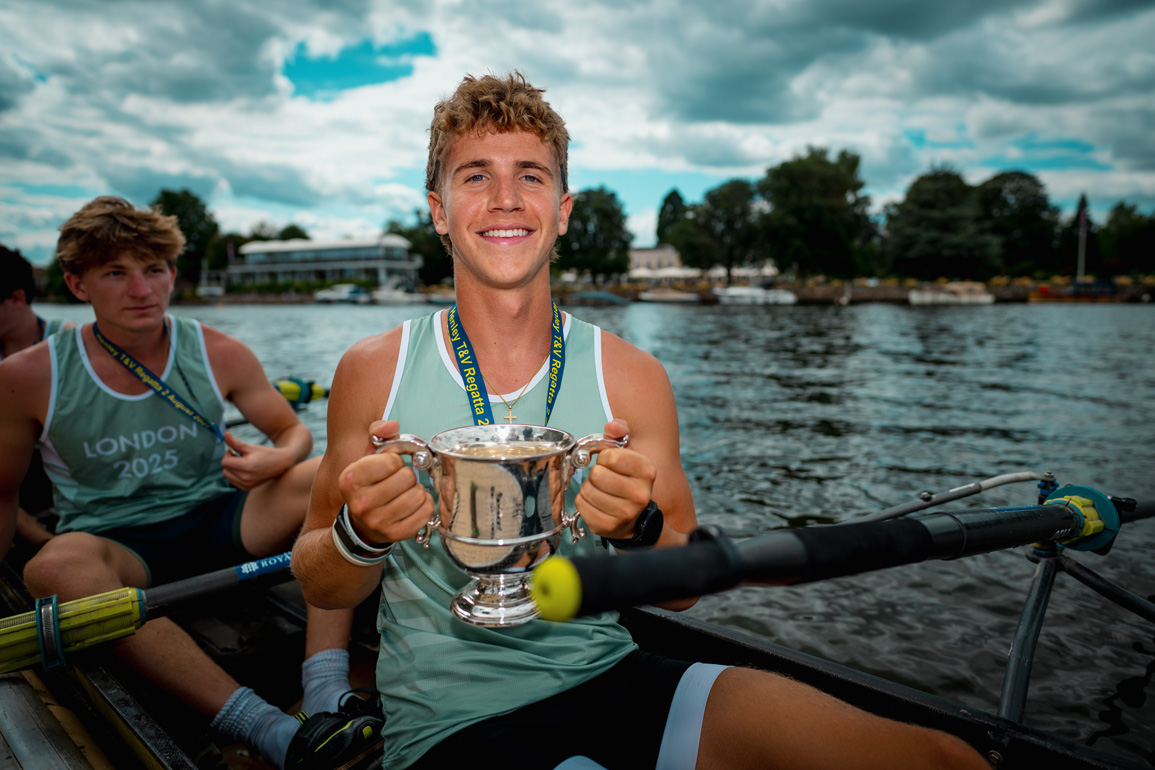
International regattas represent a fundamentally different experience. Events like Henley Royal Regatta, Henley Women's Regatta, and European club regattas expose athletes to different racing formats (side-by-side on the Thames at Henley is a different tactical experience than a six-lane sprint course), different competitive cultures, and the broader world of rowing beyond the American junior circuit. The experience of walking through the Henley Stewards' Enclosure or racing on a European course alongside crews from countries you've only read about has a formative quality that domestic racing doesn't replicate. In Amsterdam, the Dutch Small Boat Challenge builds toward the Dutch International Youth Regatta, racing against junior national team athletes from across Europe.
The considerations are real: time zone adjustment, unfamiliar equipment, different racing conventions, and the psychological challenge of competing in a setting that feels bigger than what you're used to. These aren't drawbacks so much as additional layers of developmental challenge — but they require readiness.
Camp-internal racing — scrimmages, time trials, seat racing, simulated competitions — provides frequent, lower-stakes opportunities for competitive experience within the camp setting. The advantages are immediacy (athletes race and debrief on the same day, often multiple times per week), direct comparison with training partners, and the ability to experiment with race strategies in a setting where the cost of failure is low. The limitation is that the competitive environment is somewhat artificial — racing against people you've trained with all week produces a different psychological experience than facing unknown competitors.
The Thames Racing Challenge in London culminates with racing at Henley Town and Visitors' Regatta — Henley-style elimination racing on arguably the most famous regatta course in the world.
What Racing Reveals That Training Doesn't
Coaches and athletes often describe the same phenomenon: an athlete who looks technically sound in practice, whose erg scores are competitive, whose physical preparation is solid — but who races differently than they train. The gap between training performance and racing performance is almost entirely psychological and tactical, and racing is the only way to develop the skills that close it.
Composure under pressure is observable only when pressure exists. How an athlete handles a poor start, an unexpected move from another crew, a headwind on the third 500, or the mounting lactic acid of the final sprint — these responses reveal patterns that training alone doesn't expose.
Adaptability shows up when conditions change. Different water, different wind, different competitors, different crew composition — racing at camp introduces variables that demand adjustment. Athletes who can adapt perform consistently across environments. Athletes who can't tend to perform well only in familiar settings.
Real-time communication matters most when it matters most. For coxswains, racing is the ultimate test of their ability to read a race, manage a crew, and make decisions under pressure. For rowers, it tests their ability to maintain technical discipline when fatigue and adrenaline compete for attention.
Response to adversity is the most informative data point racing provides. When a race doesn't go as planned — and in summer racing with unfamiliar crews, this happens regularly — the athlete's response tells coaches (and the athlete themselves) more about their competitive character than any number of successful practice pieces.
For college recruiting specifically, coaches want to see race mentality. An athlete's erg score tells a coach what their body can produce. Race footage and results tell a coach how they compete — which, for many programs, is the more important question.
Preparing for Race Day at Camp
Preparation for racing at camp operates on two levels: physical and psychological.
Physical preparation during camp should be managed by the coaching staff. Quality programs periodize training leading into race days — reducing volume, maintaining intensity, and ensuring athletes are physically ready to perform. If your athlete is racing at camp, the program should be adjusting training loads in the days preceding competition. Ask about this if it's not communicated.
Mental preparation is where many athletes — particularly those new to racing at camp — benefit from guidance. Racing in an unfamiliar crew on unfamiliar water is inherently uncertain. Athletes who manage expectations, focusing on execution and effort rather than specific time or placement outcomes, tend to have better experiences. The goal is learning, not winning (though the two aren't mutually exclusive).
Logistics are worth understanding in advance. What time does the athlete need to be at the venue? What's the warm-up routine? What should they bring (nutrition, hydration, additional clothing, sunscreen)? For international regattas, are there registration procedures, credentialing requirements, or venue-specific rules your athlete should know?
Parent attendance at camp races is sometimes possible and sometimes not, depending on the venue and program structure. When parents attend, the most helpful approach is supportive presence without pressure — being there without making the race feel higher-stakes than it needs to. Your athlete is already managing the stress of performing in unfamiliar conditions; additional parental expectation doesn't help. And for many athletes, the experience of racing independently, without family in the grandstand, is itself a developmental milestone.
After the Race: Making It Count
The developmental value of racing at camp isn't captured in the result. It's captured in what happens after — the debrief, the reflection, and the translation of race experience into ongoing development.
Structured debrief. Quality programs build post-race reflection into the schedule. This isn't just "how'd it go?" — it's guided inquiry into specific elements of the race experience. What happened at the start? When did technique change? How did you manage the middle of the piece? What did you notice about your internal dialogue when the race got hard? These questions turn a race from an event into data.
Video review of race footage, when available, compounds the debrief. Athletes can observe their technical execution under race pressure and compare it to their training footage. The gaps between how they row in practice and how they row in a race are among the most valuable insights camp can provide.
Translating lessons to the fall season. Race insights should connect to goals for continued development. An athlete who notices their catch timing deteriorates under pressure now has a specific, self-identified focus for fall training — not because a coach told them, but because they observed it themselves. This is self-coaching in action.
The long view. A single race result at summer camp is one data point. It is not a verdict on an athlete's ability, trajectory, or potential. Athletes who race poorly at camp and respond by working on what the race revealed often develop further than athletes who race well and conclude they've arrived. Camp racing is most valuable when treated as a learning experience rather than a performance evaluation. For a realistic look at how camp racing connects (and doesn't connect) to the recruiting process, see The College Rowing Recruiting Timeline: When Camps Matter.
Racing should be a component of athletic development, not the entirety of it. The best camp racing experiences give athletes opportunities to compete, learn, and grow — then connect those lessons to the longer arc of their development. Ask camps about their racing philosophy: how they prepare athletes, what role racing plays in the program, and how they help athletes process the experience afterward.
Sparks includes racing in many of our programs — from European regattas to Thames racing to structured camp competitions. If you'd like to learn more about our racing programming and how it fits into athlete development, visit our program pages or reach out in the lower right hand corner.