Running camps are everywhere. From local cross-country team retreats to week-long altitude programs in Colorado, the options for high school distance runners have multiplied in the past decade. Most offer some combination of mileage, coaching, and camaraderie. Some are very good at what they do.
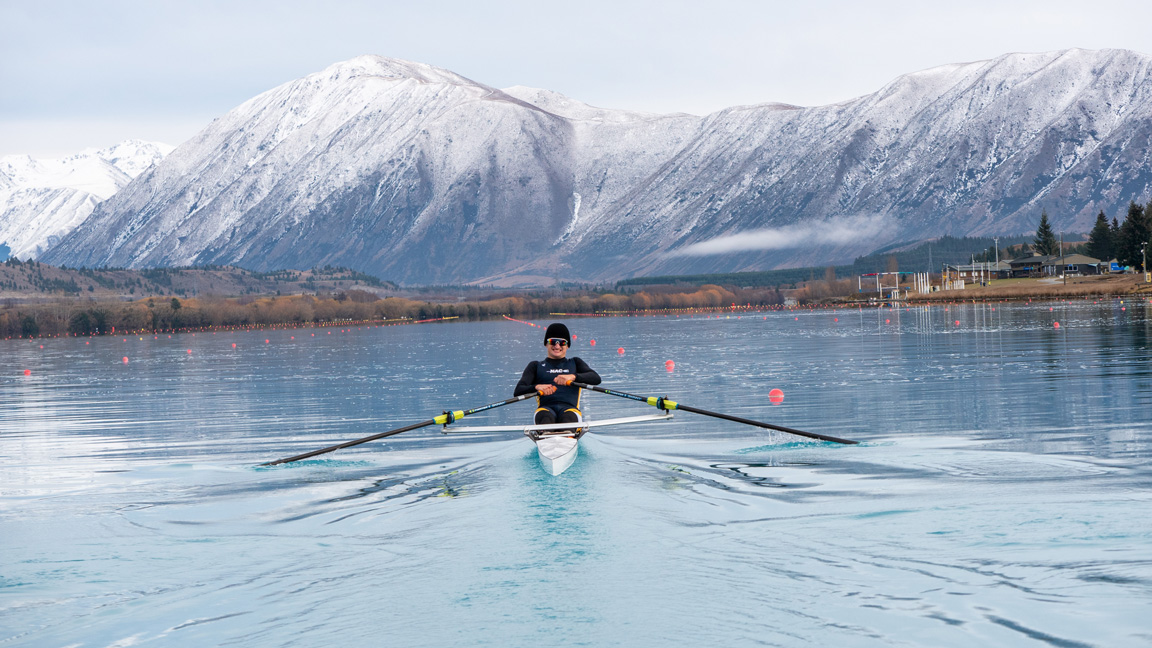
Sparks Running Camps are built on a different premise. Born from 15 years of experiential education in sport — originally in rowing, now extended to distance running — our programs prioritize extended duration, international training environments, whole-athlete development, and a self-coaching philosophy that gives athletes tools they can use for years after camp ends. This article explains what that looks like in practice, so you can evaluate whether it's the right fit.
Training Where the Pros Train
Our running programs are based in two Alpine locations, each chosen for specific training advantages rather than scenic appeal (though they have that too).
St. Moritz, Switzerland sits at approximately 1,800 meters (5,900 feet) in the Engadin Valley. It's not just a beautiful mountain town — it's one of the world's established high-altitude training destinations for professional runners. The On Athletics Club Europe is based here. The On Youth Camp for promising European juniors trains here. Olympic marathoners, world championship medalists, and professional middle-distance runners regularly complete altitude training blocks in St. Moritz because the infrastructure exists to support serious work.
What that infrastructure looks like for our athletes: a free 400-meter track at altitude, an extensive network of groomed running trails through the valley and surrounding mountains, access to pools, gymnasiums, and recovery facilities, and a town whose economy and culture are built around supporting athletes. When we say our athletes train where the professionals train, we mean it literally — they may share trails and track sessions with runners they've watched compete on television.
Sestriere, Italy offers a different but complementary training environment. At 2,035 meters (6,677 feet), it's home to Europe's highest outdoor athletics track. The elevation is meaningful — approximately 700 feet higher than St. Moritz, providing a stronger altitude stimulus for athletes whose bodies are ready for it. The terrain surrounding Sestriere emphasizes technical trail running on Alpine paths, and the Italian Alps offer a distinctly different landscape and training character than the Swiss Engadin.
Both locations were selected because they provide what serious altitude training requires: appropriate elevation, quality facilities, safe training surfaces, and communities accustomed to supporting athletes. We didn't choose them because "international" sounds impressive on a brochure.
Coaches and Educators, Not Just Fast Runners
Our running programs operate at a 1:3 staff-to-athlete ratio. That number is worth pausing on, because it shapes every aspect of the camp experience.
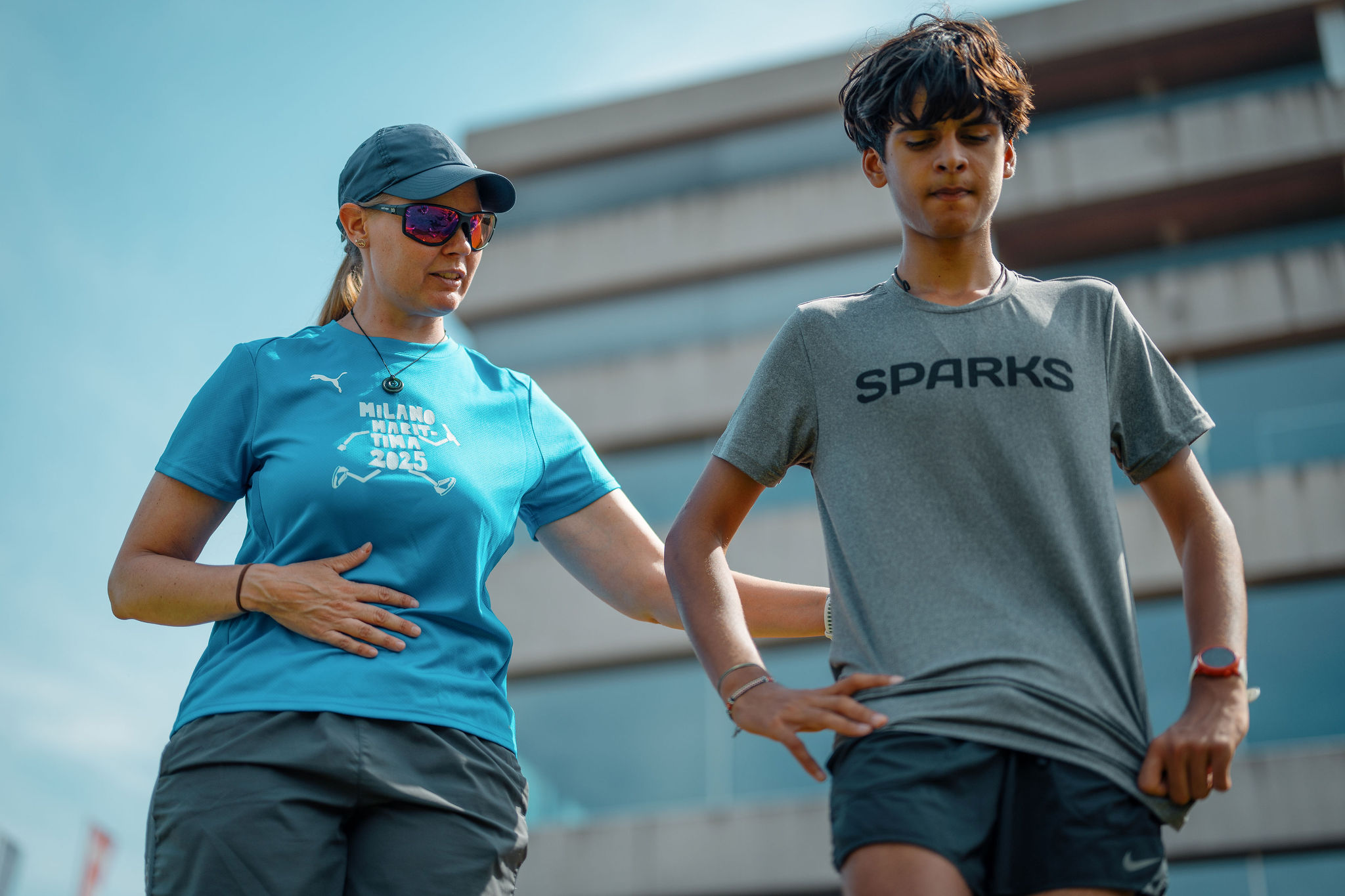
At 1:3, coaches don't just lead group runs. They observe individual gait patterns, monitor how specific athletes respond to altitude, adjust training loads based on daily check-ins, and build genuine coaching relationships over the course of two weeks. Each athlete receives individual gait analysis — not a one-time assessment, but ongoing observation and adjustment throughout camp. Strength programming is customized based on individual movement patterns and injury history. Performance psychology sessions happen daily, not as an add-on, but as a core element of training.
Our coaching staff combines U.S. collegiate coaches with Swiss and European coaches, providing athletes exposure to different training philosophies and coaching perspectives. Every staff member also brings experiential education experience — they understand adolescent development, not just running physiology. This matters because coaching a 16-year-old through altitude adjustment, homesickness, and genuine physical challenge requires a different skill set than writing a workout.
We also employ a dedicated physiotherapist throughout camp. This isn't a trainer who doubles as a gear manager. It's a qualified physiotherapist whose entire role is monitoring athlete health, providing treatment as needed, and advising coaching staff on training load adjustments. For two weeks of intensive altitude training with teenage athletes, this isn't a luxury — it's a necessity.
The Science of Meaningful Adaptation
Most running camps last five to seven days. We run two-week programs, and the reason is physiological, not logistical.
Research on altitude training is consistent on one point: meaningful adaptation — the kind that produces measurable changes in EPO production, red blood cell volume, and oxygen-carrying capacity — requires a minimum of two to three weeks of exposure. In the first three to five days at altitude, the body is adjusting. Performance typically dips. Sleep may be disrupted. Effort levels feel elevated at familiar paces. This is normal and expected.
Between days five and ten, the body begins adapting to the reduced oxygen availability. EPO production increases. The cardiovascular system starts compensating. But this is early adaptation — the beginning of a process, not its completion.
At two weeks and beyond, meaningful physiological changes begin to consolidate. Red blood cell production increases. Oxygen utilization becomes more efficient. The athlete starts performing better at altitude and — critically — will carry those adaptations back to sea level, where they translate into a temporary but real performance advantage during a specific window after return.
A five-day camp at altitude provides acclimatization experience, which has value. But it doesn't provide sufficient time for the physiological changes that most families associate with "altitude training." We designed our programs at two weeks because that's where the research says real adaptation begins. For the science behind altitude training — what it does, how long it takes, and how to use it — see What Altitude Training Actually Does for High School Runners.
Beyond physiology, two weeks also matters for skill development and relationship building. Technical changes to running form require repetition and reinforcement to become habitual. Coaching relationships need time to develop trust. The self-coaching practices we teach — structured reflection, effort calibration, pattern recognition under fatigue — need multiple cycles of action and reflection to take hold. Five days introduces concepts. Two weeks begins to ingrain them.
Development That Lasts Beyond Camp
The most common frustration families share about camp experiences is what happens after: athletes return home inspired but unable to translate what they learned into ongoing development. The coach's voice is gone, the training structure dissolves, and within a few weeks, the experience becomes a memory rather than a turning point.
Our programs are designed specifically to address this gap. The self-coaching philosophy that underpins everything at Sparks — originally developed across 15 years of rowing programming — teaches athletes to become accurate observers of their own performance.
In running, this looks like learning to read effort levels with precision, not just "easy" and "hard" but the specific gradations between them that govern effective training. It means recognizing when running form begins breaking down under fatigue — and understanding what's happening mechanically when it does. It means developing awareness of personal stress signals, the physical and psychological patterns that indicate when to push and when to recover.
These aren't abstract concepts. They're practiced daily through structured reflection sessions, video review of running mechanics, and coached conversations that prioritize questions over directives. "What did you notice about your stride when you crested that hill?" comes before "Your arm swing collapsed at mile three."
Athletes also leave with tangible resources: individual gait analysis they can reference and continue monitoring at home, customized strength programming designed for their movement patterns and accessible without specialized equipment, and goal-setting documents that connect camp learning to their home training environment. The mental skills — recognizing patterns under stress, calibrating effort accurately, structuring personal reflection — are tools they'll use for as long as they run.
Understanding the Investment
What's included: Housing in St. Moritz or Sestriere for the full two-week duration. All meals, designed around athlete nutrition principles — fueling for training, recovery, and the increased demands of altitude. All coaching and instruction at a 1:3 ratio. Dedicated physiotherapy access throughout camp. Facility access including track, gymnasium, and pool. Structured excursions and cultural experiences that are part of the program, not filler — athletes engage with the communities and landscapes where they're training.
What's not included: International flights (families arrange travel independently), travel insurance, and personal spending money. We provide detailed logistics guides for families managing international travel, and we connect families on similar flight itineraries when possible.
Honest Assessment of Fit
Athletes who tend to thrive in our running programs are serious high school distance runners — not beginners, but athletes with a consistent training base who are genuinely interested in developing as runners, not just accumulating miles. They're curious about the mental side of performance and see value in structured reflection alongside structured training. They're ready for challenge — physical, psychological, and personal — and are seeking an experience that goes beyond logging runs in a pretty location.
Athletes who might consider other options include those primarily looking for maximum training volume at minimum cost, for whom a domestic altitude camp in Colorado or Arizona offers a more straightforward value proposition. Athletes who aren't ready for international travel — and there's no developmental failing in that; readiness varies widely among teenagers — might benefit from starting closer to home. And athletes seeking a large social experience should know that our cohorts are intentionally small, typically 12 athletes. The intimacy of a small group is central to how the program works, but it's a different experience than a camp with 80 runners.
Parents evaluating running camps can find a comprehensive framework in A Parent’s Guide to Evaluating Summer Sports Camps.
Our running programs are newer than our rowing camps, but they're built on the same foundation: 15 years of learning how to develop young athletes through extended, immersive, reflective programming. If you're evaluating whether Sparks is the right fit for your runner, we're happy to talk through it. Reach out in the lower right hand corner, or visit the Swiss Alpine Running Challenge and Italian Alpine Running Challenge pages for program-specific details.